

ETH Industry Day 2025 @ Open-i

Saurabh Bhargava, joined the SDSC as a Principal Data Scientist in the Industry Cell at the Zürich office in 2022. Saurabh previously worked in the retail sector and the advertising industry in Germany. He lead and built various data products for customers using state of the art machine learning methods and industrializing them thereby adding value for the customers. He completed his PhD from ETH Zürich in June 2017 specializing in machine learning applications on Audio data. He obtained his Master’s and Bachelor’s degrees from EPFL and Indian Institute of Technology (IIT), Roorkee, India in 2011 and 2009 respectively. His interests and expertise are in combining state of the art data science and data engineering tools for building scalable data products.


Anna joined SDSC as a Data Scientist focusing on industry collaborations in July 2019. She completed her PhD in Bioinformatics at the University of Luxembourg, where she analysed large-scale heterogeneous datasets and leveraged multiple disciplines: Statistics, Network Analysis, and Machine Learning. Before joining SDSC, Anna worked as a Data Scientist at Deloitte Luxembourg, with a focus on computer vision and time-series analysis.Currently, Anna is a Principal Data Scientist based at the ETH Zurich office, where she leads biomedical collaborations with industry partners. Anna works on a range of projects: protein properties prediction, biomanufacturing optimization, statistical model evaluation and others.

Nora earned her Ph.D. in Computer Science/Bioinformatics from the University of Tübingen, where she focused on the in silico design of peptide-based vaccines using combinatorial optimization and machine learning. During her postdoctoral fellowship at Memorial Sloan Kettering Cancer Center in New York, and later as a staff scientist at the New York Genome Center, she worked on metagenomics, infectious diseases, and cancer. In 2015, Nora joined NEXUS Personalized Health Technologies at ETH Zurich where her focus shifted towards the management of clinical and biomedical research data. In May 2024, she joined the Swiss Data Science Center as Head of Biomedical Data Science.

Marisol has a degree in Law and more than 15 years of experience working as a notary officer in Madrid. After relocating to Switzerland with her family, she obtained a certification to teach Spanish as a foreign language, dedicating four years to teaching Spanish online to students of all ages and backgrounds. Marisol has returned to her professional roots as an administrative assistant, joining the SDSC team in June 2023.
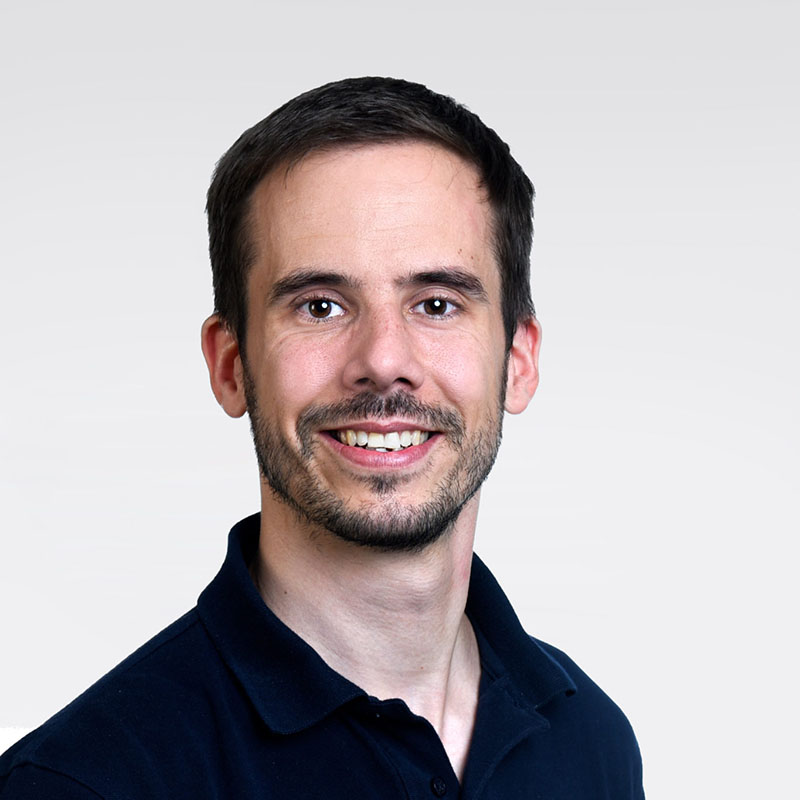
Luis is originally from Spain, where he completed his bachelor's studies in Electrical engineering, and the Ms.C. on signal theory and communications, both at the University of Seville. During his Ph.D. he started focusing on machine learning methods, more specifically message passing techniques for channel coding, and Bayesian methods for channel equalization. He carried it out between the University of Seville and the University Carlos III in Madrid, also spending some time at the EPFL, Switzerland, and Bell Labs, USA, where he worked on advanced techniques for optical channel coding. When he completed his Ph.D. in 2013, he moved to the Luxembourg Center on Systems Biomedicine, where he switched his interest to neuroscience, neuroimaging, life sciences, etc., and the application of machine learning techniques to these fields. During his 4 and a half years there as a Postdoc, he worked on many different problems as a data scientist, encompassing topics such as microscopy image analysis, neuroimaging, single-cell gene expression analysis, etc. He joined the SDSC in April 2018. As Lead Data Scientist, Luis coordinates projects in various domains. Several projects focus on the application of natural language processing and knowledge graphs to the study of different phenomena in social and political sciences. In the domains of architecture and engineering, Luis is responsible for projects centered on the application of novel generative methods to parametric modeling. Finally, Luis also coordinates different projects in robotics, ranging from collaborative robotic construction to deformable object manipulation.

Aleksandra Anna (Ania) Apolinarska is a senior scientist working at the intersection of data science and computational design. Since 2020, she has collaborated with the SDSC, co-developing AIXD, an open-source toolbox for AI-eXtended Design. In 2025, she joined the SDSC Research Team in Zurich to further advance machine learning and generative AI methods for design in industrial applications.
Ania began her career in the architecture, engineering, and construction (AEC) industry before earning a PhD from ETH Zurich in 2018, with focus on computational design and robotic fabrication. She continued her research as a postdoctoral fellow and also pursued a Diploma of Advanced Studies (DAS) in Data Science at ETH Zurich.
Presentation
Explore ways of advancing your data science and AI journey
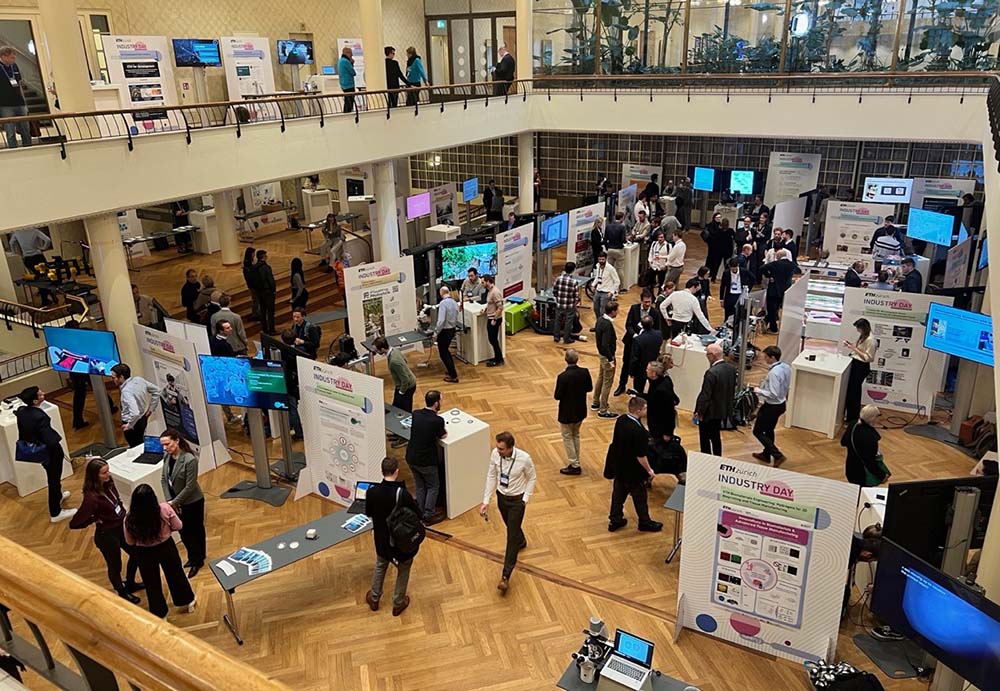
Meet the Swiss Data Science Center (SDSC) at ETH Industry Day @ Open-i 2025 in the "AI& Automation" section (Gartensaalfoyer).
Seize the opportunity to:
· Get to know the Swiss Data Science Center: who we are and what we deliver.
· Discover the impact we create: how various companies were empowered unlock data-driven success.
· Explore collaboration opportunities: ways to working together to tailor solutions for diverse industrial needs.
· Advance your AI journey: share your challenges and let us guide you towards transformative data solutions.
Visit our Industry Team on Stand A 15
Our experts will be there for your questions and project ideas the whole day at stand A15 of the ETH Industry Day exhibition in the "AI & Automation" section in the Gartensaalfoyer of Zurich Convention Center.
Explore the AIXD Toolbox on Stand A14
The ETH Design++ team and collaborators - kfm Research, Gramazio Kohler and the Swiss Data Science Center - will be on site at booth A14 in the "AI & Automation" section, with Augmented Reality demos showing how the AI-eXtended Design (AIXD) Toolbox can be used to interactively explore the solution space in architectural and engineering design problems. Meet the team – Jacky Choi and Aleksandra Ania Apolinarska – and get a glimpse of the AIXD tools for forward and inverse design and for accelerated design. Come and explore real-world examples of bridge structures and facade elements designed with the help of the toolbox.
Details
The innovation event for industry on 27 November 2025 at the Zurich Convention Center: Join us as academia and industry come together to drive innovation, explore cutting-edge research, and create new collaboration opportunities.
Immerse yourself in cutting-edge research, explore groundbreaking technologies, engage with world-class scientists, and discover the most promising start-up ventures. ETH Zurich @ Open-i offers a comprehensive perspective on innovation, complemented by exceptional networking opportunities.
Secure your spot now by booking the special ETH ticket for CHF 445 (50% discount on the regular ticket price) with full access. All presentations and interviews will be held in English.
Programme
Explore the program of the ETH Industry Day.
More information on the full Open-i Program.
Other events
AMLD 2024 | Clinical AI: from Research and Development to the Bed Side
SDSC-Connect | AI for Precision Medicine
Synthetic Data for Biomedical Applications

Before joining SDSC, Arshjot Khehra received his MSc in Artificial Intelligence from USI Lugano, where he completed his thesis on hierarchical graph reinforcement learning. Previously, he worked for 4+ years across India and Singapore gaining data science experience in insurance, logistics, and manufacturing sectors. He also holds a BSc in Industrial Engineering from PEC Chandigarh. Over the course of his career, Arshjot worked on a wide array of projects, such as, handwritten text recognition and generation, voice matching across phone call recordings, policy lapse rate prediction for customer retention, and automated insurance claim processing.

Matthias Galipaud obtained his PhD in evolutionary biology in 2012 from the University of Burgundy in Dijon (France), and held postdoctoral positions as a mathematical biologist at the university of Bielefeld (Germany) and the university of Zurich, where he researched the evolutionary theories of aging and mate choice. In 2020, he became a data scientist, developing machine learning solutions for startups in Switzerland and Australia before joining the SDSC Innovation Team in November 2022.

Valerio started his career working for 7 years as a particle-physics researcher at CERN. In 2016, he moved to consulting, applying data science in several industries. First, he joined the Quant team of Ernst & Young in Geneva. Later, he created his own company, SamurAI sàrl, providing consulting services for his clients. He also has a passion for teaching very complex subjects in simple terms. That is why he particularly enjoys offering training programs to private companies and universities. Valerio joined the SDSC in May 2022 as a Principal Data Scientist with the mission of accompanying industrial partners and other institutions through their data science journey.
Data Science for the Sciences
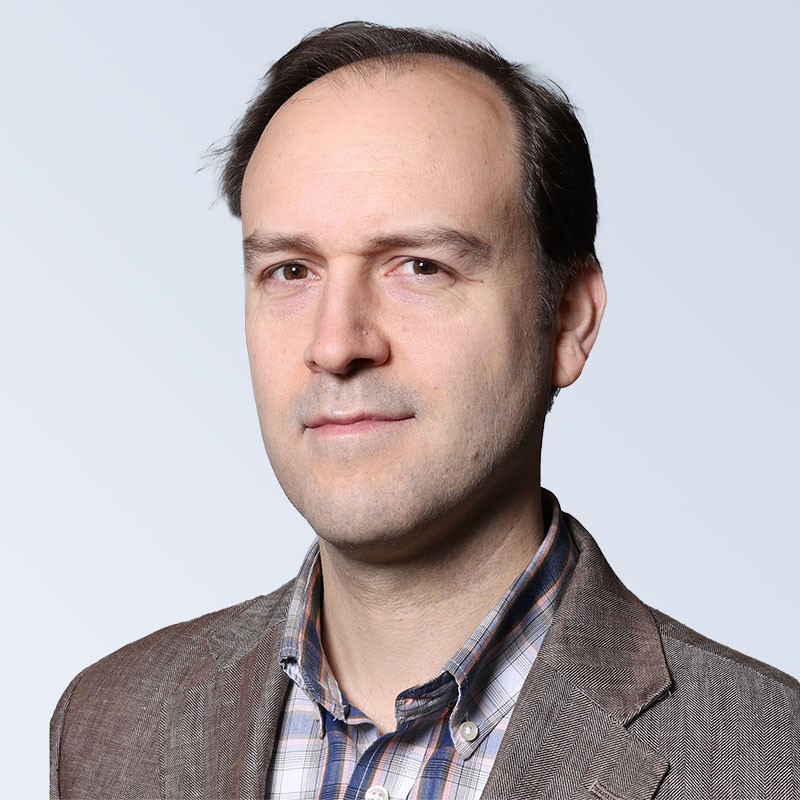
Guillaume Obozinski graduated with a PhD in Statistics from UC Berkeley in 2009. He did his postdoc and held until 2012 a researcher position in the Willow and Sierra teams at INRIA and Ecole Normale Supérieure in Paris. He was then Research Faculty at Ecole des Ponts ParisTech until 2018. Guillaume has broad interests in statistics and machine learning and worked over time on sparse modeling, optimization for large scale learning, graphical models, relational learning and semantic embeddings, with applications in various domains from computational biology to computer vision.
ENID | Enabling Innovation with Data Science at UNIL-EPFL

Prof. Olivier Verscheure is the director and founder of the Swiss Data Science Center (SDSC). Olivier also co-leads a joint training program between EPFL and HEC Lausanne, specifically designed for senior executives. Since 2018, Olivier has been a member of the Board of Directors of Lonza, a global leader in the life sciences sector. This company provides products and services to the pharmaceutical, biotechnology, and specialized healthcare industries.Olivier began his career at IBM Research after earning his Ph.D. in computer science from EPFL. He held several research and leadership positions at the IBM T. J. Watson Research Center in New York and co-created and co-directed the IBM Research center in Dublin, Ireland, before joining the EPFL in 2016.
Matthias Galipaud obtained his PhD in evolutionary biology in 2012 from the University of Burgundy in Dijon (France), and held postdoctoral positions as a mathematical biologist at the university of Bielefeld (Germany) and the university of Zurich, where he researched the evolutionary theories of aging and mate choice. In 2020, he became a data scientist, developing machine learning solutions for startups in Switzerland and Australia before joining the SDSC Innovation Team in November 2022.

Olivier joined the SDSC as a data scientist focused on industry collaborations in February 2023. He obtained a MSc in Physics (2017) from EPFL with a minor in Mathematics, and a PhD in Astrophysics (2021) from Aix-Marseille University. Before joining the SDSC, he worked in a small start-up, as a data scientist, on a variety of topics, including data wrangling, natural language processing and time series forecasting.
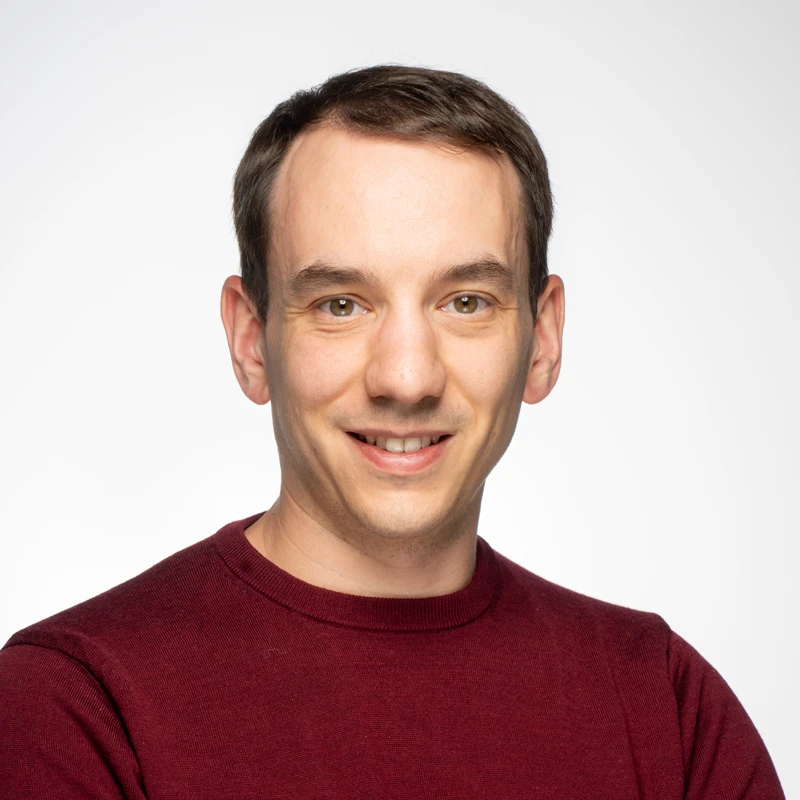
Clément Lefeebvre joined the SDSC in January 2019 as a Data Scientist with an emphasis on industry-oriented projects in the Innovation team, based in Lausanne.
He holds a Bachelor of Science degree in Physics, acquired in 2016 from the École Polytechnique Fédérale de Lausanne (EPFL) in Switzerland. Following this, he earned a Master of Science in Computational Science and Engineering in 2018, also from EPFL. Throughout his academic journey, Clément concentrated on leveraging Data Science and Machine Learning techniques to enhance efficiency in industrial processes. Subsequently, he developed a specialized interest in Generative AI, with a particular focus on Natural Language Processing (NLP), especially in the application of Large Language Models for innovation.
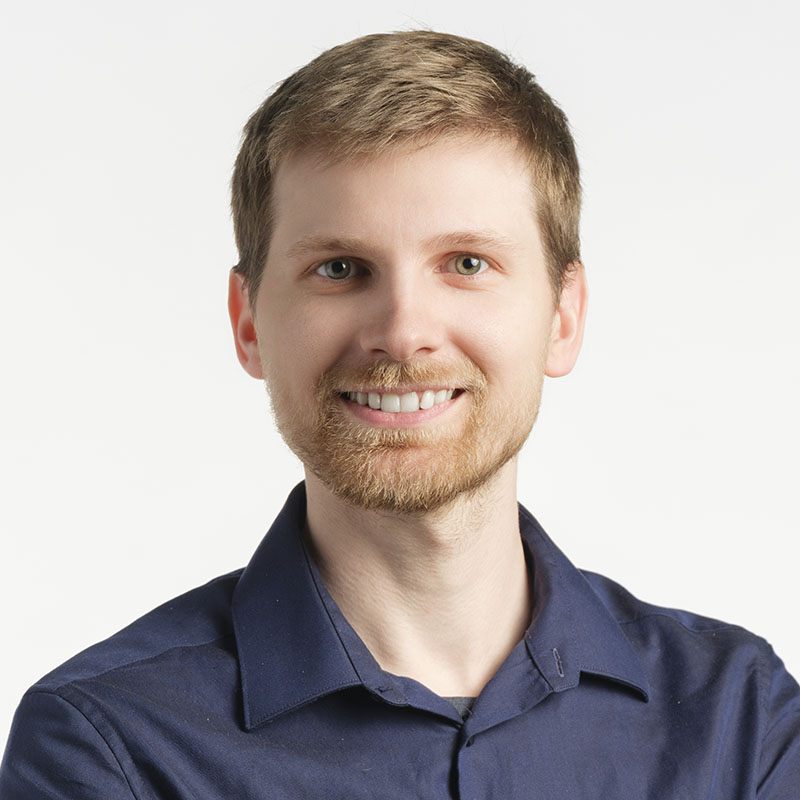
Thibaut holds a B.Sc in Computer Science from HEIG-VD. Before joining the SDSC, he worked in startups where he developped a diverse skill set combining cloud infrastructure, database and application development. Thibaut is very enthusiatic about new technologies and best coding practices and he is looking forward to supporting the team and its projects.
SDSC-Connect 2023
Prof. Olivier Verscheure is the director and founder of the Swiss Data Science Center (SDSC). Olivier also co-leads a joint training program between EPFL and HEC Lausanne, specifically designed for senior executives. Since 2018, Olivier has been a member of the Board of Directors of Lonza, a global leader in the life sciences sector. This company provides products and services to the pharmaceutical, biotechnology, and specialized healthcare industries.Olivier began his career at IBM Research after earning his Ph.D. in computer science from EPFL. He held several research and leadership positions at the IBM T. J. Watson Research Center in New York and co-created and co-directed the IBM Research center in Dublin, Ireland, before joining the EPFL in 2016.

Silvia holds an MSc in Computer Science from EPFL and a PhD in Computer Science from the University of York, UK. She has been a senior research fellow at the University of Trento and later at Politecnico di Milano, Italy. Here, she had the chance to work on Marie Curie and ERC projects relating to natural language processing. From 2012 to 2019, she was a Senior Manager and NLP expert at ELCA Informatique Switzerland, whose AI department she helped create and expand. Silvia joined the Swiss Data Science Center in 2019 and is currently its Chief Transformation Officer, in charge of the team leading organizations to digital transformation.

Roberto holds an M.Sc. and a Ph.D. in Particle Physics from the University of Torino, Italy. He has worked for several years in fundamental research as a senior fellow and data scientist at the CERN Experimental Physics division and on a research project supported by the Belgian National Fund for Scientific Research (FNRS). In 2018 he moved to EPFL to work on data mining and Machine Learning techniques for the built environment and renewable energies. He has started and led multiple collaborations with academic and industry partners in the energy domain. Roberto joined the SDSC in September 2021 as a Principal Data Scientist with the mission of accompanying industries, NGOs and international organizations through their data science journey.
Contact us
Would you like to explore how we can work together?
Our team of data scientists and professionals looks forward to engaging in impactful, results-driven collaborations with you.