

Open Pulse Mini Hackathon

As an EPFL Life Science Engineer, my main interest is to do science with an impact. FAIR principals guide my work style, and I strive for user-centric infrastructure to encompass data science in the biomedical and governmental spheres. I have experience in Global Health, working with multi-hospital surveillance system for pandemics, as well as training data scientist (thegraphcourses.org). My core side-interests lie in ocean conservation notably cetacean conservation, biodiversity, and untreated health problematics from lower and middle income countries. I have solid hard skills in problem-solving, data engineering in AI/ML, and have developed soft skills in creativity and social integration. I have acquired domain knowledge in a diversity of fields: from biology-related sciences such as human gut microbiology, epidemiology, and environmental sciences, as well as social sciences such as anthropology and psychology. I am always happy to engage with new people on innovative and impactful thematics so please do reach out!


Robin joined the SDSC in 2022. He received an MSc. in Management, Economics & Consumer Studies from the University of Wageningen in the Netherlands. After his studies, he developed himself into a consultant in the area of ontology & linked data modelling, working mostly in the domain of local and national infrastructure projects. He has a great interest in standardization efforts in the field of semantic web technology standards and is actively working at SDSC with clients and collaborators to stimulate their adoption.

Carlos Vivar Ríos joined the SDSC in 2023, where he is part of the Open Research Data and Engagement Unit (ORDES). As a multidisciplinary data engineer, he brings a diverse background in biology, cognitive sciences, and bioinformatics from the University of Malaga. His multifaceted professional career spans several disciplines, including genomics at RIKEN in Yokohama, multidimensional image analysis in microscopy at the University of Lausanne (UNIL), and cellular biology modeling at INRIA in Lyon. Carlos has been involved in a variety of projects, such as analyzing astrocyte calcium dynamics, de novo sequencing Solea senegalensis, drug repurposing for Alzheimer's based on GWAS studies, conducting geospatial analysis for linguistic corpora, and assessing drought through remote sensing. He is dedicated to advancing reproducible research methods and actively supports the open science movement.

Oksana is a disruptive innovator bringing her positive energy to projects. Driven by her curiosity and can-do attitude she excels in industrial and academic contexts. Oksana earned her PhD in Life Sciences and Bioinformatics from the University of Lausanne after two MSc in Bioinformatics and in Information Systems from the University of Geneva. For more than 10 years, she has been committed to actively promoting the value of data science and advocating the best practices for reproducible and ethical research. She believes that Swiss Data Science Center is a key player in building a competitive data economy in Switzerland leveraging its innovative potential and renown commitment to quality.

Presentation
Open Pulse is an open research data toolset developed by EPFL Open Science and the SDSC. It automates the discovery and monitoring of open-source software outputs and their impact, laying the groundwork for making these contributions visible, measurable, and valued within research institutions. Unlike traditional metrics that focus on volume—such as downloads or citations—Open Pulse emphasizes community engagement and collaboration as the true measures of impact. By introducing meaningful quality metrics, it reveals which open-source software projects thrive, how communities interact, and the level of FAIRness, offering a clearer picture of open-source software contributions’ true value.
Target audience:
We welcome researchers, software developers, science administrators, data scientists, research software engineers, IT & library professionals, and anyone involved or interested in producing, maintaining, or assessing open-source software in research.
No coding expertise is required. Conceptual, strategic, and community insights are just as valuable as technical skills. If you care about how open-source software is recognized, evaluated, or sustained in academia, this is your chance to shape the future of open science.
Details
Date: 25.11.2025
Time: 09:00 - 15:00
Location: EPFL Lausanne, room BC 05
Programme
During a focused half-day sprint, you will join an interdisciplinary team of 3–4 participants to dive into the Open Pulse interface and tackle themed challenges - or pursue your own project idea related to open-source software.
Your team can prototype dashboards, interactive notebooks, simulations, or other creative outputs that show how Open Pulse metrics can inform research evaluation, strengthen engagement, and guide institutional strategy. You’ll have the opportunity to present your solution in a lightning demo session, receive practical guidance and peer feedback, and celebrate standout contributions during a prize ceremony.
Other events
ETH Industry Day 2024 @ Open-i
Personalized Health Technologies 2024

Nora earned her Ph.D. in Computer Science/Bioinformatics from the University of Tübingen, where she focused on the in silico design of peptide-based vaccines using combinatorial optimization and machine learning. During her postdoctoral fellowship at Memorial Sloan Kettering Cancer Center in New York, and later as a staff scientist at the New York Genome Center, she worked on metagenomics, infectious diseases, and cancer. In 2015, Nora joined NEXUS Personalized Health Technologies at ETH Zurich where her focus shifted towards the management of clinical and biomedical research data. In May 2024, she joined the Swiss Data Science Center as Head of Biomedical Data Science.

Cyril joined the SDSC in 2022. He holds a Ph.D. in computational biology from Sorbonne University and the Institut Pasteur in Paris. There, he developed tools to detect changes in the 3D conformation of chromosomes and analyzed how it is altered during infection by bacterial pathogens. Before that, he received an MSc. in Bioinformatics from the University of Lausanne, where he worked on evolutionary genomics in insects. Over time, Cyril developed a strong interest in open and transparent scientific research. He is eager to promote good software and data management practice in research.

Stefan has a background in Biology and decided to move towards evolutionary bioinformatics for both his MSc and PhD.Over the years, he developed a passion for the entire data analysis process: from collecting data, to analyzing and presenting results. Presentations, particularly opportunities for public speaking, are activities he enjoys since he values communication a lot. In order to follow this passion and deepen his knowledge on systems to collect and manage data, he joined SDSC in 2023 as a Biomedical Data Engineer.Outside work, Stefan is an avid reader of sci-fi books (but not only!), enjoys swimming, running, and biking both competitively and casually and enjoys plenty of activities with friends, especially when beer is involved.
Daniel worked as a postdoctoral researcher on critical event prediction for the University Hospital in Zurich. In addition, Daniel has worked as a postdoctoral researcher in Lausanne, delivering algorithms for Bayesian inference in big panel data. Previously in Paris, he developed models for automated scientific discovery. He obtained a Ph.D. from the University of Edinburgh, funded by a Microsoft Research scholarship. His interest relates primarily to attacking applied biomedicine problems from different angles, frequentist statistics, Bayesian statistics, and Machine Learning.
Quentin graduated with an engineering degree in mathematics and computer science from École des Ponts ParisTech in 2019. After a 6-month experience at the Center for Data Science of the New York University working on applied Machine Learning for medical imaging, he did a PhD in Statistics at Gustave Eiffel University (Paris). During his PhD, Quentin worked on random graphs and selective inference. His recent cross-disciplinary collaborations involve applications in biology and hydrology.
SDSC Hackathon: ORD for the Sciences

Valerio started his career working for 7 years as a particle-physics researcher at CERN. In 2016, he moved to consulting, applying data science in several industries. First, he joined the Quant team of Ernst & Young in Geneva. Later, he created his own company, SamurAI sàrl, providing consulting services for his clients. He also has a passion for teaching very complex subjects in simple terms. That is why he particularly enjoys offering training programs to private companies and universities. Valerio joined the SDSC in May 2022 as a Principal Data Scientist with the mission of accompanying industrial partners and other institutions through their data science journey.
Luis is originally from Spain, where he completed his bachelor's studies in Electrical engineering, and the Ms.C. on signal theory and communications, both at the University of Seville. During his Ph.D. he started focusing on machine learning methods, more specifically message passing techniques for channel coding, and Bayesian methods for channel equalization. He carried it out between the University of Seville and the University Carlos III in Madrid, also spending some time at the EPFL, Switzerland, and Bell Labs, USA, where he worked on advanced techniques for optical channel coding. When he completed his Ph.D. in 2013, he moved to the Luxembourg Center on Systems Biomedicine, where he switched his interest to neuroscience, neuroimaging, life sciences, etc., and the application of machine learning techniques to these fields. During his 4 and a half years there as a Postdoc, he worked on many different problems as a data scientist, encompassing topics such as microscopy image analysis, neuroimaging, single-cell gene expression analysis, etc. He joined the SDSC in April 2018. As Lead Data Scientist, Luis coordinates projects in various domains. Several projects focus on the application of natural language processing and knowledge graphs to the study of different phenomena in social and political sciences. In the domains of architecture and engineering, Luis is responsible for projects centered on the application of novel generative methods to parametric modeling. Finally, Luis also coordinates different projects in robotics, ranging from collaborative robotic construction to deformable object manipulation.
Carlos Vivar Ríos joined the SDSC in 2023, where he is part of the Open Research Data and Engagement Unit (ORDES). As a multidisciplinary data engineer, he brings a diverse background in biology, cognitive sciences, and bioinformatics from the University of Malaga. His multifaceted professional career spans several disciplines, including genomics at RIKEN in Yokohama, multidimensional image analysis in microscopy at the University of Lausanne (UNIL), and cellular biology modeling at INRIA in Lyon. Carlos has been involved in a variety of projects, such as analyzing astrocyte calcium dynamics, de novo sequencing Solea senegalensis, drug repurposing for Alzheimer's based on GWAS studies, conducting geospatial analysis for linguistic corpora, and assessing drought through remote sensing. He is dedicated to advancing reproducible research methods and actively supports the open science movement.
Oksana is a disruptive innovator bringing her positive energy to projects. Driven by her curiosity and can-do attitude she excels in industrial and academic contexts. Oksana earned her PhD in Life Sciences and Bioinformatics from the University of Lausanne after two MSc in Bioinformatics and in Information Systems from the University of Geneva. For more than 10 years, she has been committed to actively promoting the value of data science and advocating the best practices for reproducible and ethical research. She believes that Swiss Data Science Center is a key player in building a competitive data economy in Switzerland leveraging its innovative potential and renown commitment to quality.
Data-Driven Control Methods for Energy and Manufacturing

Roberto holds an M.Sc. and a Ph.D. in Particle Physics from the University of Torino, Italy. He has worked for several years in fundamental research as a senior fellow and data scientist at the CERN Experimental Physics division and on a research project supported by the Belgian National Fund for Scientific Research (FNRS). In 2018 he moved to EPFL to work on data mining and Machine Learning techniques for the built environment and renewable energies. He has started and led multiple collaborations with academic and industry partners in the energy domain. Roberto joined the SDSC in September 2021 as a Principal Data Scientist with the mission of accompanying industries, NGOs and international organizations through their data science journey.
Carl holds a Ph.D in Mathematics from École des Ponts ParisTech and Université Gustave Eiffel in Paris. He has broad interests in statistics and stochastic control, and works on reinforcement learning, generative methods and time series forecasting, with applications in various domains such as energy, finance and physics. He worked with EDF R&D and Finance des Marchés de l’Energie (FiME) laboratory on applications of machine learning to risk management, including time series generation and deep hedging. He joined the SDSC in 2022 as a senior data scientist in the academic team at École Polytechnique Fédérale de Lausanne (EPFL).

Victor joined as a Data Scientist in the SDSC Innovation team in 2023. He holds a Bachelor's degree in Mechanical Engineering (B.Eng.) from the University of Pretoria in South Africa, as well as Master's degrees in Robotics and Mechatronics (M.Sc.) and Artificial Intelligence (M.Sc.) from KU Leuven in Belgium.Prior to joining SDSC, he worked for several years as a consultant at Capgemini Engineering and as an R&D Engineer at Toyota Motor Europe. Within the Advanced Powertrain and Target Setting team at Toyota, Victor played a crucial role in the pre-development of innovative electric and fuel-cell vehicles. His responsibilities included leading the development and deployment of Natural Language Processing (NLP) tools and pipelines, data science and machine learning, building data analytics dashboards, statistical forecasting, powertrain design, optimal control system design, and strategic technical target setting. He is passionate about leveraging his combined Engineering and Data Science knowledge to solve complex problems in the industry.
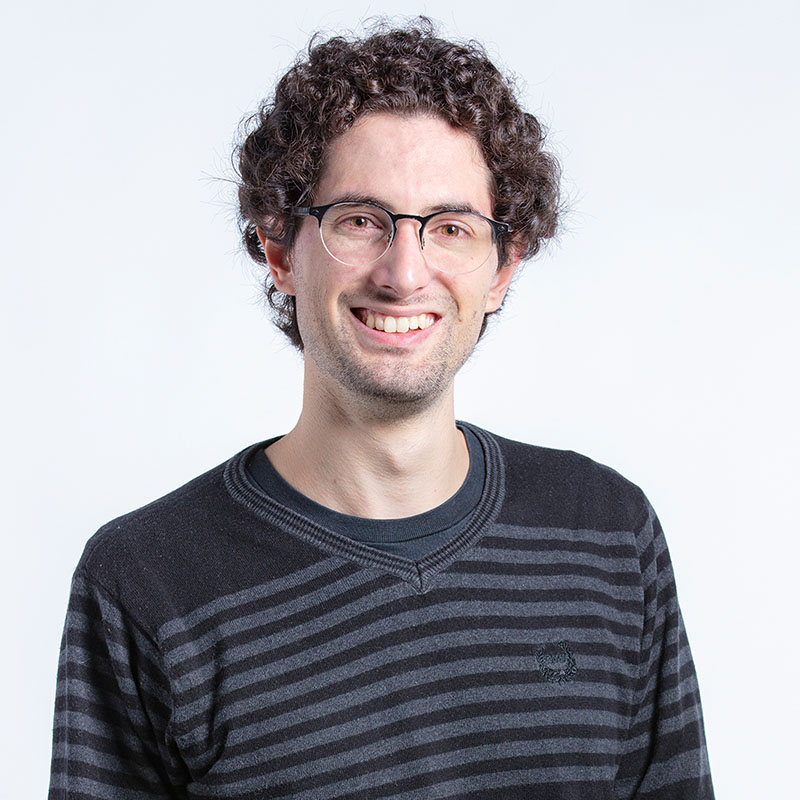
After earning a MSc in Theoretical Physics at University of Padua, Giulio graduated in Quantitative Finance from Bocconi University. Before joining the SDSC industry cell in June 2021, he spent a few years working in the financial sector, where he mainly dealt with the application of machine learning to financial risk management. When not coding, Giulio spends his free time playing bass guitar, hiking and cooking.

AI for Decision Makers – Executive Course at ETH Zürich

Prof. Olivier Verscheure is the director and founder of the Swiss Data Science Center (SDSC). Olivier also co-leads a joint training program between EPFL and HEC Lausanne, specifically designed for senior executives. Since 2018, Olivier has been a member of the Board of Directors of Lonza, a global leader in the life sciences sector. This company provides products and services to the pharmaceutical, biotechnology, and specialized healthcare industries.Olivier began his career at IBM Research after earning his Ph.D. in computer science from EPFL. He held several research and leadership positions at the IBM T. J. Watson Research Center in New York and co-created and co-directed the IBM Research center in Dublin, Ireland, before joining the EPFL in 2016.

Silvia holds an MSc in Computer Science from EPFL and a PhD in Computer Science from the University of York, UK. She has been a senior research fellow at the University of Trento and later at Politecnico di Milano, Italy. Here, she had the chance to work on Marie Curie and ERC projects relating to natural language processing. From 2012 to 2019, she was a Senior Manager and NLP expert at ELCA Informatique Switzerland, whose AI department she helped create and expand. Silvia joined the Swiss Data Science Center in 2019 and is currently its Chief Transformation Officer, in charge of the team leading organizations to digital transformation.

Anna joined SDSC as a Data Scientist focusing on industry collaborations in July 2019. She completed her PhD in Bioinformatics at the University of Luxembourg, where she analysed large-scale heterogeneous datasets and leveraged multiple disciplines: Statistics, Network Analysis, and Machine Learning. Before joining SDSC, Anna worked as a Data Scientist at Deloitte Luxembourg, with a focus on computer vision and time-series analysis.Currently, Anna is a Principal Data Scientist based at the ETH Zurich office, where she leads biomedical collaborations with industry partners. Anna works on a range of projects: protein properties prediction, biomanufacturing optimization, statistical model evaluation and others.

Matthias Galipaud obtained his PhD in evolutionary biology in 2012 from the University of Burgundy in Dijon (France), and held postdoctoral positions as a mathematical biologist at the university of Bielefeld (Germany) and the university of Zurich, where he researched the evolutionary theories of aging and mate choice. In 2020, he became a data scientist, developing machine learning solutions for startups in Switzerland and Australia before joining the SDSC Innovation Team in November 2022.

Dan received an MSc in civil and environmental engineering from UC Berkeley and a Ph.D. from EPFL, where he developed models combining machine learning and geographic information systems to estimate renewable energy potentials on a large scale. After serving as a researcher/data scientist at Unisanté (Lausanne) and completing a one-year postdoc at the Quebec Artificial Intelligence Institute (Mila) in Montréal, Dan joined the SDSC Innovation team. His work has generally been focusing on crafting and tailoring machine learning methods and deep learning architectures for a variety of domains, most notably the spatio-temporal modeling and forecasting of environmental and energy related variables, as well as multiple applications in public health research.
AMLD Workshop Generative AI for Forward and Inverse Design in Architecture and Engineering
Contact us
Would you like to explore how we can work together?
Our team of data scientists and professionals looks forward to engaging in impactful, results-driven collaborations with you.