
AI for Decision Makers – Executive Course at ETH Zürich

Prof. Olivier Verscheure is the director and founder of the Swiss Data Science Center (SDSC). Olivier also co-leads a joint training program between EPFL and HEC Lausanne, specifically designed for senior executives. Since 2018, Olivier has been a member of the Board of Directors of Lonza, a global leader in the life sciences sector. This company provides products and services to the pharmaceutical, biotechnology, and specialized healthcare industries.Olivier began his career at IBM Research after earning his Ph.D. in computer science from EPFL. He held several research and leadership positions at the IBM T. J. Watson Research Center in New York and co-created and co-directed the IBM Research center in Dublin, Ireland, before joining the EPFL in 2016.


Silvia holds an MSc in Computer Science from EPFL and a PhD in Computer Science from the University of York, UK. She has been a senior research fellow at the University of Trento and later at Politecnico di Milano, Italy. Here, she had the chance to work on Marie Curie and ERC projects relating to natural language processing. From 2012 to 2019, she was a Senior Manager and NLP expert at ELCA Informatique Switzerland, whose AI department she helped create and expand. Silvia joined the Swiss Data Science Center in 2019 and is currently its Chief Transformation Officer, in charge of the team leading organizations to digital transformation.

Anna joined SDSC as a Data Scientist focusing on industry collaborations in July 2019. She completed her PhD in Bioinformatics at the University of Luxembourg, where she analysed large-scale heterogeneous datasets and leveraged multiple disciplines: Statistics, Network Analysis, and Machine Learning. Before joining SDSC, Anna worked as a Data Scientist at Deloitte Luxembourg, with a focus on computer vision and time-series analysis.Currently, Anna is a Principal Data Scientist based at the ETH Zurich office, where she leads biomedical collaborations with industry partners. Anna works on a range of projects: protein properties prediction, biomanufacturing optimization, statistical model evaluation and others.

Matthias Galipaud obtained his PhD in evolutionary biology in 2012 from the University of Burgundy in Dijon (France), and held postdoctoral positions as a mathematical biologist at the university of Bielefeld (Germany) and the university of Zurich, where he researched the evolutionary theories of aging and mate choice. In 2020, he became a data scientist, developing machine learning solutions for startups in Switzerland and Australia before joining the SDSC Innovation Team in November 2022.

Dan received an MSc in civil and environmental engineering from UC Berkeley and a Ph.D. from EPFL, where he developed models combining machine learning and geographic information systems to estimate renewable energy potentials on a large scale. After serving as a researcher/data scientist at Unisanté (Lausanne) and completing a one-year postdoc at the Quebec Artificial Intelligence Institute (Mila) in Montréal, Dan joined the SDSC Innovation team. His work has generally been focusing on crafting and tailoring machine learning methods and deep learning architectures for a variety of domains, most notably the spatio-temporal modeling and forecasting of environmental and energy related variables, as well as multiple applications in public health research.

Saurabh Bhargava, joined the SDSC as a Principal Data Scientist in the Industry Cell at the Zürich office in 2022. Saurabh previously worked in the retail sector and the advertising industry in Germany. He lead and built various data products for customers using state of the art machine learning methods and industrializing them thereby adding value for the customers. He completed his PhD from ETH Zürich in June 2017 specializing in machine learning applications on Audio data. He obtained his Master’s and Bachelor’s degrees from EPFL and Indian Institute of Technology (IIT), Roorkee, India in 2011 and 2009 respectively. His interests and expertise are in combining state of the art data science and data engineering tools for building scalable data products.

Before joining SDSC, Arshjot Khehra received his MSc in Artificial Intelligence from USI Lugano, where he completed his thesis on hierarchical graph reinforcement learning. Previously, he worked for 4+ years across India and Singapore gaining data science experience in insurance, logistics, and manufacturing sectors. He also holds a BSc in Industrial Engineering from PEC Chandigarh. Over the course of his career, Arshjot worked on a wide array of projects, such as, handwritten text recognition and generation, voice matching across phone call recordings, policy lapse rate prediction for customer retention, and automated insurance claim processing.
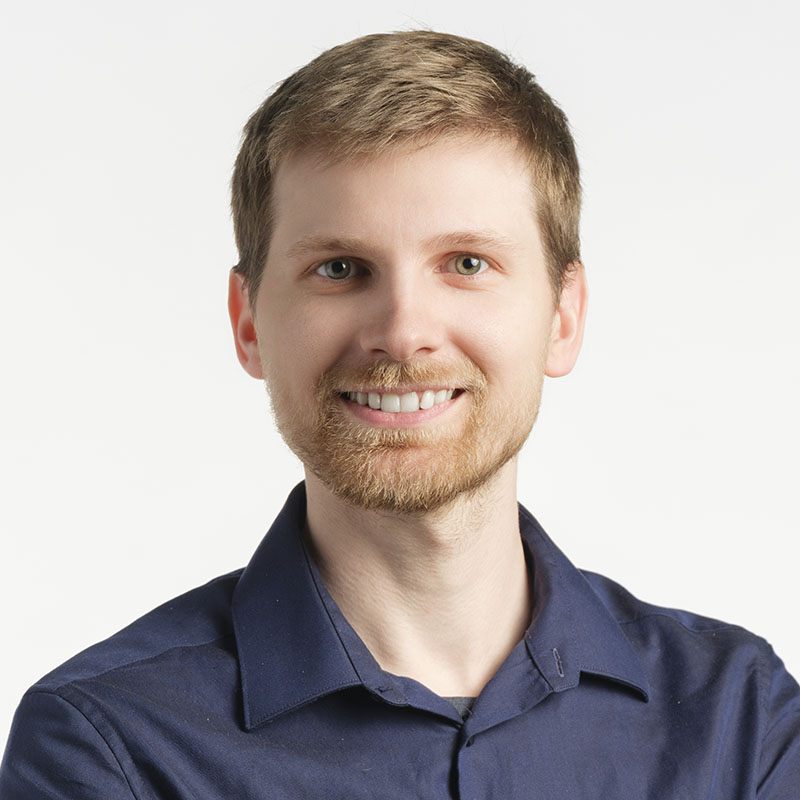
Thibaut holds a B.Sc in Computer Science from HEIG-VD. Before joining the SDSC, he worked in startups where he developped a diverse skill set combining cloud infrastructure, database and application development. Thibaut is very enthusiatic about new technologies and best coding practices and he is looking forward to supporting the team and its projects.
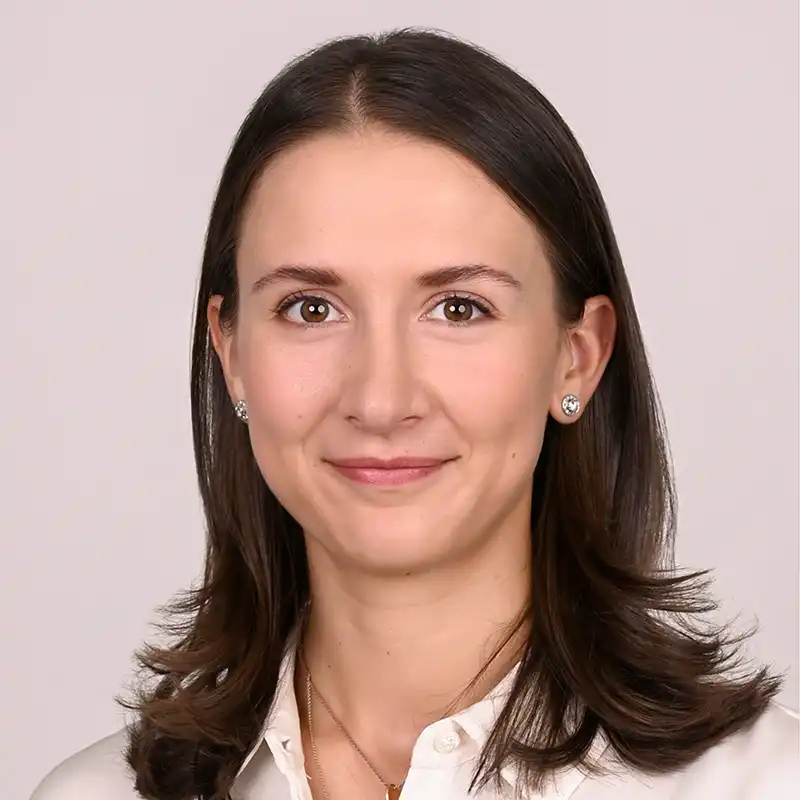
Paulina Körner joined the SDSC in September 2025 as a Data Scientist in the Innovation team in Zurich.
Paulina holds an MSc in Environmental Science from ETH Zürich and completed an MPhil in Machine Learning and Machine Intelligence at the University of Cambridge. She has worked as a data science intern in Alpine Remote Sensing and as a research assistant at ETH Zürich, where she focused on automating chemical risk evaluations. She also gained consulting experience at South Pole, supporting clients in designing decarbonization roadmaps. Paulina is particularly interested in interpretable machine learning and in applying AI to address real-world challenges in environmental science, industry, and the public sector.
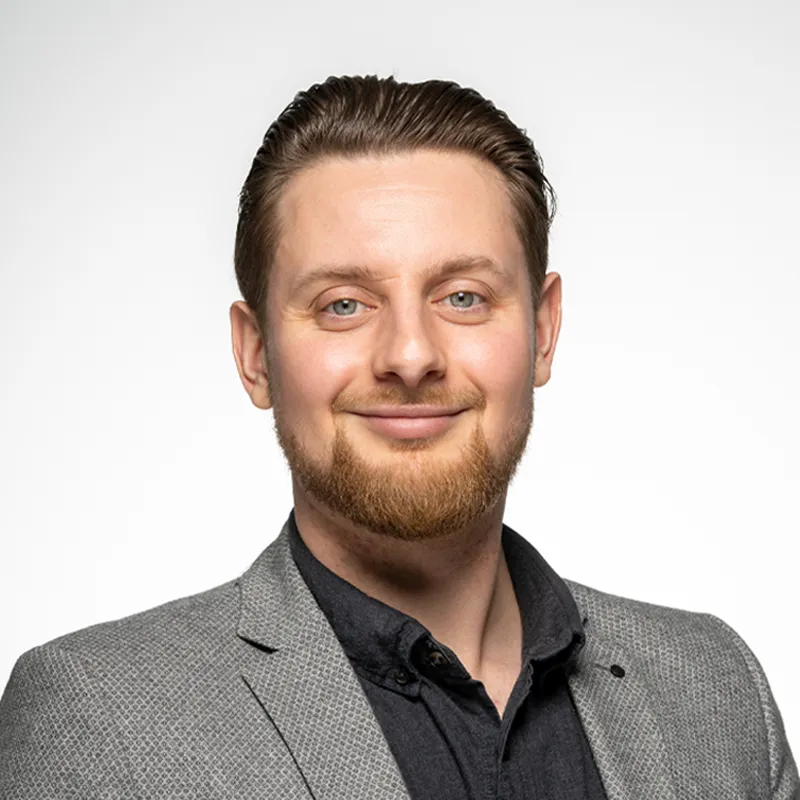
Kyle (Hogir) van de Langemheen joined the SDSC in September 2025 as a Machine Learning Engineer in the Innovation team, based in Lausanne.
Kyle holds an MSc in Artificial Intelligence from the University of Groningen. He brings several years of experience applying AI across research and industry.
Outside of his professional interests, Kyle enjoys hiking, reading, cooking, and coffee.

Presentation
Organizations generate massive amounts of data, yet many struggle to turn it into results. This unique executive program gives decision-makers a practical, strategic framework to identify high-value opportunities, avoid common pitfalls, and lead successful data-driven initiatives.
Why Join
"AI for Decision Makers" (AI4DM) helps leaders navigate fast-changing technologies and rising expectations by focusing on real-world impact. You will learn how to evaluate data and AI opportunities, build trust in analytics, and drive innovation across your organization.
Who Should Attend
Ideal for executives, CDOs, digital and innovation leaders, project owners, and managers responsible for data initiatives and data-driven decisions. No technical or coding knowledge is required.
What You Will Learn
+ Data & AI strategy for leaders: Understand key data science, machine learning and AI concepts and their business implications.
+ Opportunity evaluation: Assess feasibility, risk, cost, and value using proven frameworks.
+ From concept to MVP: Explore how high-impact data products are designed and tested.
+ Responsible & trustworthy AI: Address data quality, ethics, explainability, and governance.
+ Leading transformation: Measure impact, manage stakeholders, and support adoption.
Your Outcomes
You will leave with practical business knowledge, a clear roadmap for implementing data science projects, tools for leading data-driven change, and a network of peers tackling similar challenges.
Delivered by the Swiss Data Science Center
AI4DM is taught by experts from the Swiss Data Science Center – a joint initiative of ETH Zurich and EPFL – combining academic discipline with hands-on industry insight. The program was created with the support of EPFL Extension School.
Details
Target audience
Experienced professionals and executives wishing to steer data science initiatives and generate business impact. The course will be given in English.
Dates and schedule
- Fri. January 22, 2027, 9am to 5pm
- Thu. January 28, 2027, 9am to 5pm
- Fri. January 29, 2027, 9am to 5pm
- Thu. February 4, 2027, 9am to 5pm
- Fri. February 5, 2027, 9am to 5pm
Instructors
- Prof. Olivier Verscheure, Executive Director, Swiss Data Science Center (SDSC) - EPFL & ETH Zurich
- Dr. Silvia Quarteroni, Head of Innovation, SDSC - EPFL & ETH Zurich
- Dr. Anna Fournier, Principal Data Scientist, SDSC - ETH Zurich
- Dr. Matthias Galipaud, Senior Data Scientist, SDSC - ETH Zurich
- Dr. Dan Assouline, Senior Data Scientist, SDSC - EPFL
- Dr. Saurabh Bhargava, Principal Data Scientist, SDSC - ETH Zurich
- Arshjot Khehra, Senior Data Scientist, SDSC - ETH Zurich
- Paulina Körner, Data Scientist, SDSC - ETH Zurich
- Thibaut Loiseau, Machine Learning Engineer, SDSC - EPFL
- Kyle van de Langemheen, Machine Learning Engineer, SDSC - EPFL
Program Director
- Prof. Olivier Verscheure, Executive Director, Swiss Data Science Center (SDSC)
Certification
An ETH Zurich certificate will be delivered at the end of the course - a minimum attendance of 80% is required.
Course venue
ETH Zurich - "Swiss AI Tower" Andreasturm, Andreasstrasse 5, 8092 Zurich-Oerlikon, Switzerland
Room 16+17 at the 14th floor
Prerequisites
- Prior experience working with data in a practical context, such as data reporting, visualization, and statistical analysis using structured data, is required.
- Participants are required to bring their own laptop for use during hands-on practical exercises (installation of KNIME Analytics Platform free software is necessary for hands-on experience.)
- No coding experience required.
Course fee
4000.- Swiss Francs
General discount: 10% special discount for ETH employees and alumni, as well as SDSC partners.
Registration
Please register by January 15th, 2027, through the ETH Zurich School for Continuing Education website.
Number of participants is limited.
Contact
For any other course-related questions, please contact Dr. Anna Fournier at anna.fournier@sdsc.ethz.ch.
Programme
Day 1: Introduction to data science and digital transformation
- Data science history, terminology and basic concepts
- Digital transformation – becoming data-driven
- Hands-on session with no-code platform (KNIME) – supervised learning
- AI project management strategies and tools
Day 2: Fundamentals of machine learning (part 1)
- Strength and limitations of different supervised learning algorithms (including deep learning) and performance metrics, with hands-on session (KNIME)
- Best practices for industrialisation of solutions and reusability of digital assets
- Presentation of 3 use cases delivered by SDSC
Day 3: Fundamentals of machine learning (part 2)
- Strength and limitations of different algorithms for unsupervised learning and time series forecasting, with hands-on session (KNIME)
- Ethical and legal aspects of AI, with an overview of model explainability and bias mitigation technique
- Canvassing exercise – how to start a project on the right track
Day 4: Natural language processing (NLP)
- History of NLP, algorithms and applications, with hands-on session (KNIME and ChatGPT)
- AB testing for business impact assessment
- Presentation of 3 use cases delivered by SDSC
Day 5: Computer vision (CV) and generative AI
- Computer Vision (CV) algorithms and applications, with a hands-on beginner-friendly interactive programming session (in python)
- Generative AI in NLP, CV and other areas
- Presentation of 2 use cases delivered by SDSC
- Group discussion and feedback on canvassed projects by participants
Other events
AI in Production: Introduction to MLOps - Training at EPFL

Johan Berdat joined the SDSC in May 2019 as a Senior Machine Learning Engineer in the Innovation team, based in Lausanne.
After completing his M.Sc. in Computer Science at EPFL, he worked for a few years as a consultant in the industry. Specialized in natural language processing (NLP) and computer vision, he loves challenges in document analysis and knowledge extraction.
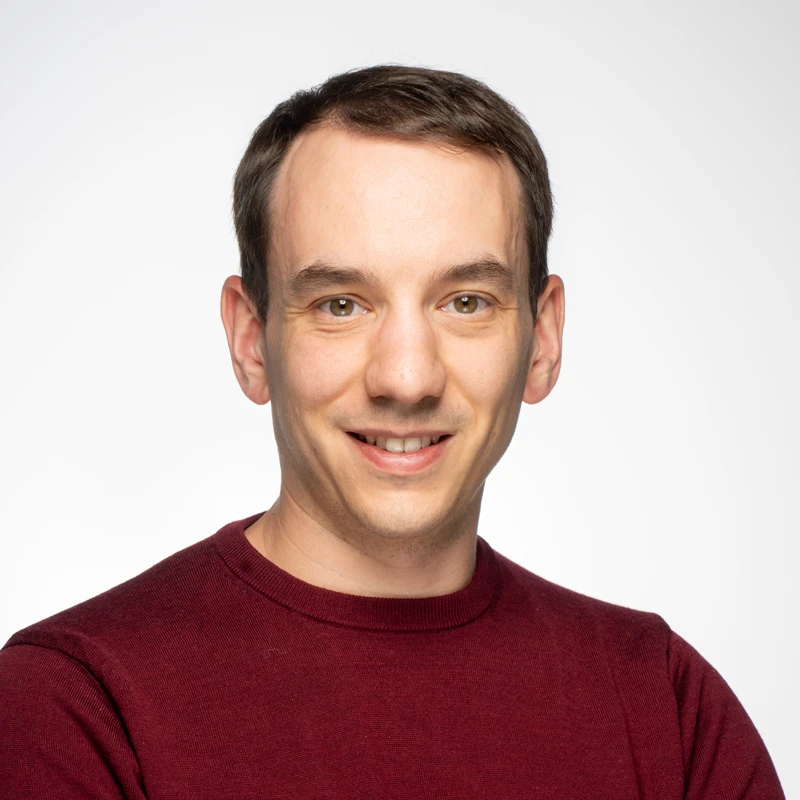
Clément Lefeebvre joined the SDSC in January 2019 as a Data Scientist with an emphasis on industry-oriented projects in the Innovation team, based in Lausanne.
He holds a Bachelor of Science degree in Physics, acquired in 2016 from the École Polytechnique Fédérale de Lausanne (EPFL) in Switzerland. Following this, he earned a Master of Science in Computational Science and Engineering in 2018, also from EPFL. Throughout his academic journey, Clément concentrated on leveraging Data Science and Machine Learning techniques to enhance efficiency in industrial processes. Subsequently, he developed a specialized interest in Generative AI, with a particular focus on Natural Language Processing (NLP), especially in the application of Large Language Models for innovation.
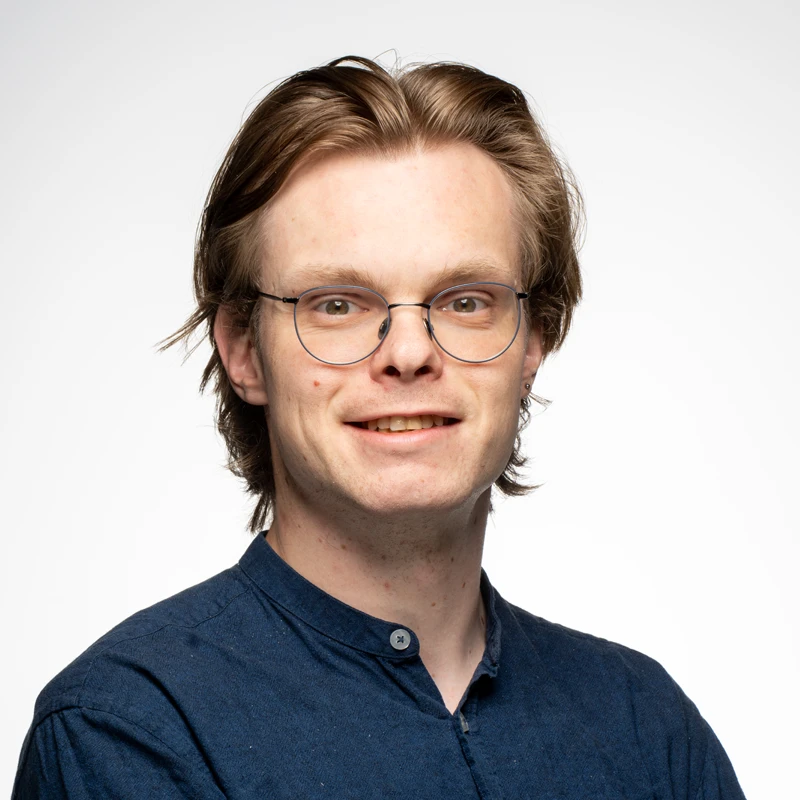
Klemen Voncina joined the SDSC in April 2026 as a Machine Learning Engineer in the Innovation team, based in Lausanne.
Klemen holds an MSc in Artificial Intelligence from the University of Groningen. Prior to this, Klemen worked for several years in both consulting roles and startups. He brings a strong engineering-focused perspective, combined with a solid background in machine learning. He particularly enjoys tackling practical challenges, especially those related to infrastructure and application deployment. Outside of work, Klemen enjoys a range of outdoor activities such as climbing and mountaineering, as well as more home-based hobbies like board games, reading, and tea.
Kyle (Hogir) van de Langemheen joined the SDSC in September 2025 as a Machine Learning Engineer in the Innovation team, based in Lausanne.
Kyle holds an MSc in Artificial Intelligence from the University of Groningen. He brings several years of experience applying AI across research and industry.
Outside of his professional interests, Kyle enjoys hiking, reading, cooking, and coffee.
Thibaut holds a B.Sc in Computer Science from HEIG-VD. Before joining the SDSC, he worked in startups where he developped a diverse skill set combining cloud infrastructure, database and application development. Thibaut is very enthusiatic about new technologies and best coding practices and he is looking forward to supporting the team and its projects.
Advanced LLM Applications and Agentic Systems - Training at EPFL
Johan Berdat joined the SDSC in May 2019 as a Senior Machine Learning Engineer in the Innovation team, based in Lausanne.
After completing his M.Sc. in Computer Science at EPFL, he worked for a few years as a consultant in the industry. Specialized in natural language processing (NLP) and computer vision, he loves challenges in document analysis and knowledge extraction.
Clément Lefeebvre joined the SDSC in January 2019 as a Data Scientist with an emphasis on industry-oriented projects in the Innovation team, based in Lausanne.
He holds a Bachelor of Science degree in Physics, acquired in 2016 from the École Polytechnique Fédérale de Lausanne (EPFL) in Switzerland. Following this, he earned a Master of Science in Computational Science and Engineering in 2018, also from EPFL. Throughout his academic journey, Clément concentrated on leveraging Data Science and Machine Learning techniques to enhance efficiency in industrial processes. Subsequently, he developed a specialized interest in Generative AI, with a particular focus on Natural Language Processing (NLP), especially in the application of Large Language Models for innovation.
Klemen Voncina joined the SDSC in April 2026 as a Machine Learning Engineer in the Innovation team, based in Lausanne.
Klemen holds an MSc in Artificial Intelligence from the University of Groningen. Prior to this, Klemen worked for several years in both consulting roles and startups. He brings a strong engineering-focused perspective, combined with a solid background in machine learning. He particularly enjoys tackling practical challenges, especially those related to infrastructure and application deployment. Outside of work, Klemen enjoys a range of outdoor activities such as climbing and mountaineering, as well as more home-based hobbies like board games, reading, and tea.
Kyle (Hogir) van de Langemheen joined the SDSC in September 2025 as a Machine Learning Engineer in the Innovation team, based in Lausanne.
Kyle holds an MSc in Artificial Intelligence from the University of Groningen. He brings several years of experience applying AI across research and industry.
Outside of his professional interests, Kyle enjoys hiking, reading, cooking, and coffee.
Thibaut holds a B.Sc in Computer Science from HEIG-VD. Before joining the SDSC, he worked in startups where he developped a diverse skill set combining cloud infrastructure, database and application development. Thibaut is very enthusiatic about new technologies and best coding practices and he is looking forward to supporting the team and its projects.
AI for Decision Makers: From Concepts to Impact - Executive Course at EPFL
Prof. Olivier Verscheure is the director and founder of the Swiss Data Science Center (SDSC). Olivier also co-leads a joint training program between EPFL and HEC Lausanne, specifically designed for senior executives. Since 2018, Olivier has been a member of the Board of Directors of Lonza, a global leader in the life sciences sector. This company provides products and services to the pharmaceutical, biotechnology, and specialized healthcare industries.Olivier began his career at IBM Research after earning his Ph.D. in computer science from EPFL. He held several research and leadership positions at the IBM T. J. Watson Research Center in New York and co-created and co-directed the IBM Research center in Dublin, Ireland, before joining the EPFL in 2016.
Silvia holds an MSc in Computer Science from EPFL and a PhD in Computer Science from the University of York, UK. She has been a senior research fellow at the University of Trento and later at Politecnico di Milano, Italy. Here, she had the chance to work on Marie Curie and ERC projects relating to natural language processing. From 2012 to 2019, she was a Senior Manager and NLP expert at ELCA Informatique Switzerland, whose AI department she helped create and expand. Silvia joined the Swiss Data Science Center in 2019 and is currently its Chief Transformation Officer, in charge of the team leading organizations to digital transformation.
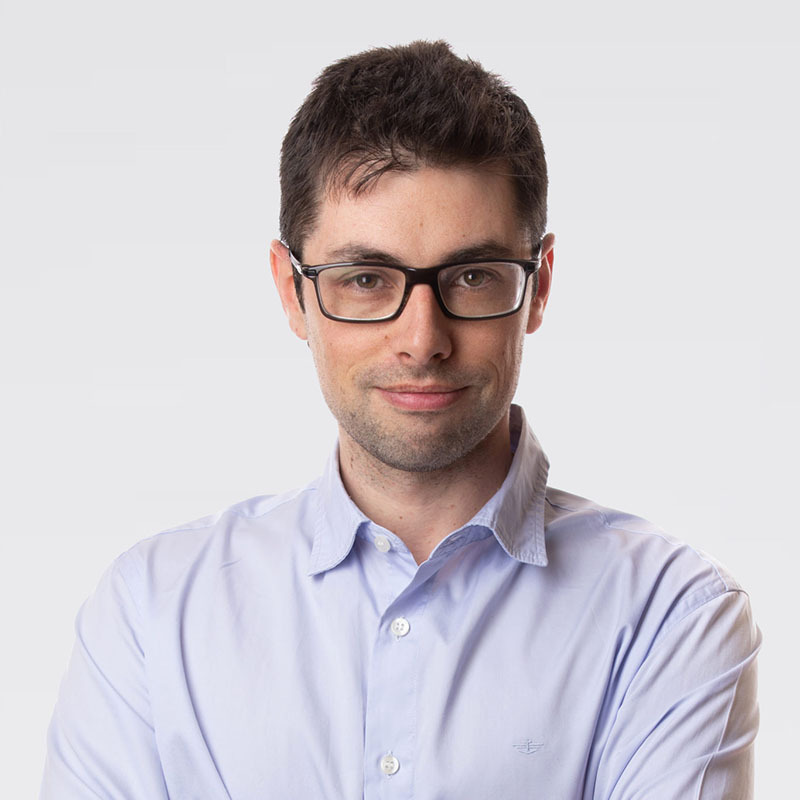
Alessandro joined the SDSC in March 2019 as a data scientist focused on industry collaborations. His mission is to support corporates in leveraging the power of their data by adopting analytical approaches and data-centric solutions. His background is in biomedical engineering, with a PhD in neuroscience from the University of Tübingen. Before joining the center, he worked as a postdoc at the Max Planck Institute for Biological Cybernetics, at the EPFL Laboratory of Cognitive Neuroscience in Geneva, and as data scientist for a private ecommerce company.
Clément Lefeebvre joined the SDSC in January 2019 as a Data Scientist with an emphasis on industry-oriented projects in the Innovation team, based in Lausanne.
He holds a Bachelor of Science degree in Physics, acquired in 2016 from the École Polytechnique Fédérale de Lausanne (EPFL) in Switzerland. Following this, he earned a Master of Science in Computational Science and Engineering in 2018, also from EPFL. Throughout his academic journey, Clément concentrated on leveraging Data Science and Machine Learning techniques to enhance efficiency in industrial processes. Subsequently, he developed a specialized interest in Generative AI, with a particular focus on Natural Language Processing (NLP), especially in the application of Large Language Models for innovation.
Thibaut holds a B.Sc in Computer Science from HEIG-VD. Before joining the SDSC, he worked in startups where he developped a diverse skill set combining cloud infrastructure, database and application development. Thibaut is very enthusiatic about new technologies and best coding practices and he is looking forward to supporting the team and its projects.
AI Insights for Chief Executives
Saurabh Bhargava, joined the SDSC as a Principal Data Scientist in the Industry Cell at the Zürich office in 2022. Saurabh previously worked in the retail sector and the advertising industry in Germany. He lead and built various data products for customers using state of the art machine learning methods and industrializing them thereby adding value for the customers. He completed his PhD from ETH Zürich in June 2017 specializing in machine learning applications on Audio data. He obtained his Master’s and Bachelor’s degrees from EPFL and Indian Institute of Technology (IIT), Roorkee, India in 2011 and 2009 respectively. His interests and expertise are in combining state of the art data science and data engineering tools for building scalable data products.
OpenPulse Community Rollout Workshop

Carlos Vivar Ríos joined the SDSC in 2023, where he is part of the Open Research Data and Engagement Unit (ORDES). As a multidisciplinary data engineer, he brings a diverse background in biology, cognitive sciences, and bioinformatics from the University of Malaga. His multifaceted professional career spans several disciplines, including genomics at RIKEN in Yokohama, multidimensional image analysis in microscopy at the University of Lausanne (UNIL), and cellular biology modeling at INRIA in Lyon. Carlos has been involved in a variety of projects, such as analyzing astrocyte calcium dynamics, de novo sequencing Solea senegalensis, drug repurposing for Alzheimer's based on GWAS studies, conducting geospatial analysis for linguistic corpora, and assessing drought through remote sensing. He is dedicated to advancing reproducible research methods and actively supports the open science movement.

Oksana is a disruptive innovator bringing her positive energy to projects. Driven by her curiosity and can-do attitude she excels in industrial and academic contexts. Oksana earned her PhD in Life Sciences and Bioinformatics from the University of Lausanne after two MSc in Bioinformatics and in Information Systems from the University of Geneva. For more than 10 years, she has been committed to actively promoting the value of data science and advocating the best practices for reproducible and ethical research. She believes that Swiss Data Science Center is a key player in building a competitive data economy in Switzerland leveraging its innovative potential and renown commitment to quality.
Zürcher KMU-KI-Programm: Ergebnisse & Prototypen
Anna joined SDSC as a Data Scientist focusing on industry collaborations in July 2019. She completed her PhD in Bioinformatics at the University of Luxembourg, where she analysed large-scale heterogeneous datasets and leveraged multiple disciplines: Statistics, Network Analysis, and Machine Learning. Before joining SDSC, Anna worked as a Data Scientist at Deloitte Luxembourg, with a focus on computer vision and time-series analysis.Currently, Anna is a Principal Data Scientist based at the ETH Zurich office, where she leads biomedical collaborations with industry partners. Anna works on a range of projects: protein properties prediction, biomanufacturing optimization, statistical model evaluation and others.
Paulina Körner joined the SDSC in September 2025 as a Data Scientist in the Innovation team in Zurich.
Paulina holds an MSc in Environmental Science from ETH Zürich and completed an MPhil in Machine Learning and Machine Intelligence at the University of Cambridge. She has worked as a data science intern in Alpine Remote Sensing and as a research assistant at ETH Zürich, where she focused on automating chemical risk evaluations. She also gained consulting experience at South Pole, supporting clients in designing decarbonization roadmaps. Paulina is particularly interested in interpretable machine learning and in applying AI to address real-world challenges in environmental science, industry, and the public sector.
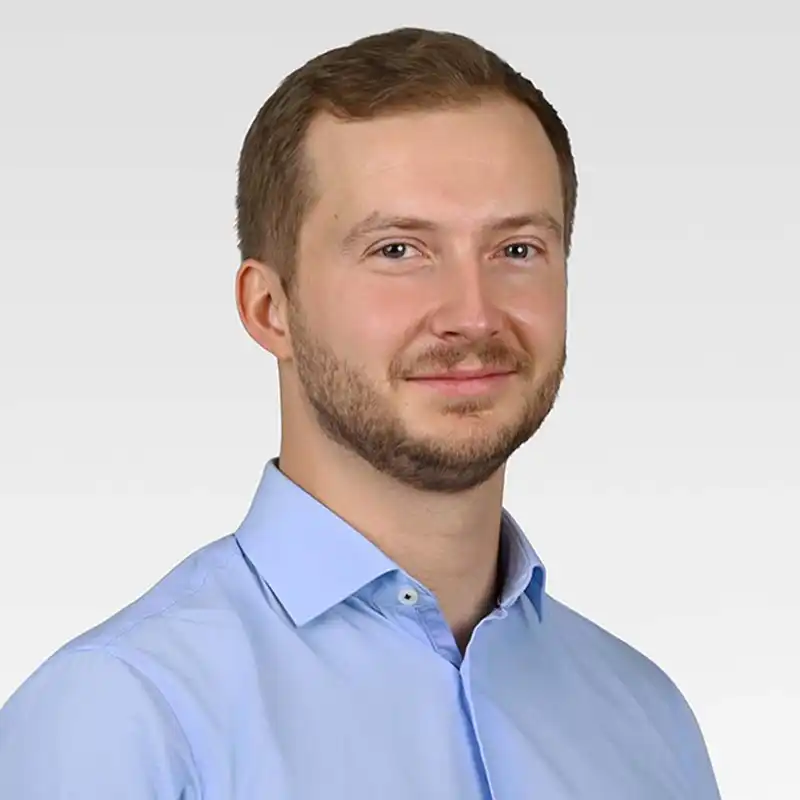
Oliver Poole joined the SDSC in December 2025 as Data Scientist for the Innovation team, based in Zurich.
Prior, Oliver completed his bachelor's and master's degrees in mechanical engineering from ETH Zurich, with research on custom 3D-printed metallic springs for (non-)linear stiffness customization and reinforcement learning applications in control systems. He developed anomaly detection systems for X-ray images of mechanical parts, milk foam quality assessment using computer vision and sensor data, and data-driven flow control strategies and extraction consistency for coffee machines. His work bridges physical engineering intuition with machine learning, focusing on robust models that connect sensor data directly to measurable outcomes in industrial systems.

Marisol has a degree in Law and more than 15 years of experience working as a notary officer in Madrid. After relocating to Switzerland with her family, she obtained a certification to teach Spanish as a foreign language, dedicating four years to teaching Spanish online to students of all ages and backgrounds. Marisol has returned to her professional roots as an administrative assistant, joining the SDSC team in June 2023.
Contact us
Would you like to explore how we can work together?
Our team of data scientists and professionals looks forward to engaging in impactful, results-driven collaborations with you.