AI in Production: Introduction to MLOps - Training at EPFL

Johan Berdat joined the SDSC in May 2019 as a Senior Machine Learning Engineer in the Innovation team, based in Lausanne.
After completing his M.Sc. in Computer Science at EPFL, he worked for a few years as a consultant in the industry. Specialized in natural language processing (NLP) and computer vision, he loves challenges in document analysis and knowledge extraction.


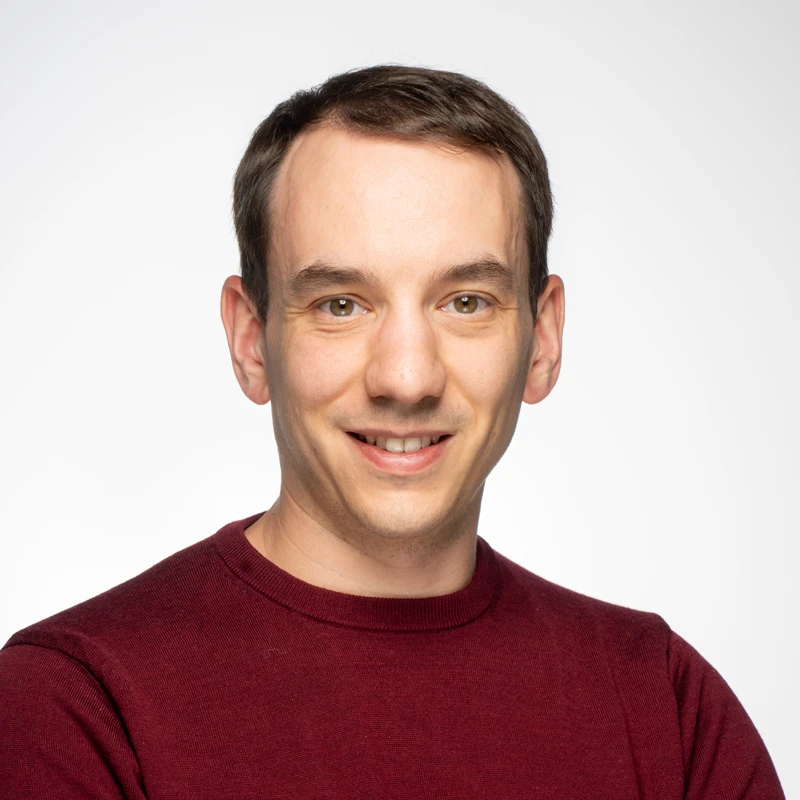
Clément Lefeebvre joined the SDSC in January 2019 as a Data Scientist with an emphasis on industry-oriented projects in the Innovation team, based in Lausanne.
He holds a Bachelor of Science degree in Physics, acquired in 2016 from the École Polytechnique Fédérale de Lausanne (EPFL) in Switzerland. Following this, he earned a Master of Science in Computational Science and Engineering in 2018, also from EPFL. Throughout his academic journey, Clément concentrated on leveraging Data Science and Machine Learning techniques to enhance efficiency in industrial processes. Subsequently, he developed a specialized interest in Generative AI, with a particular focus on Natural Language Processing (NLP), especially in the application of Large Language Models for innovation.
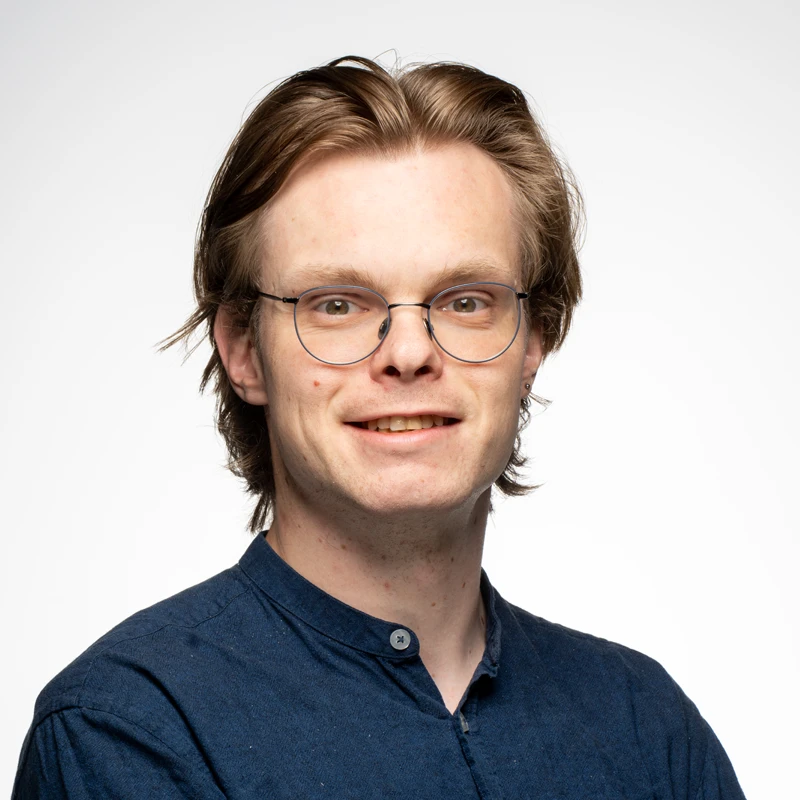
Klemen Voncina joined the SDSC in April 2026 as a Machine Learning Engineer in the Innovation team, based in Lausanne.
Klemen holds an MSc in Artificial Intelligence from the University of Groningen. Prior to this, Klemen worked for several years in both consulting roles and startups. He brings a strong engineering-focused perspective, combined with a solid background in machine learning. He particularly enjoys tackling practical challenges, especially those related to infrastructure and application deployment. Outside of work, Klemen enjoys a range of outdoor activities such as climbing and mountaineering, as well as more home-based hobbies like board games, reading, and tea.
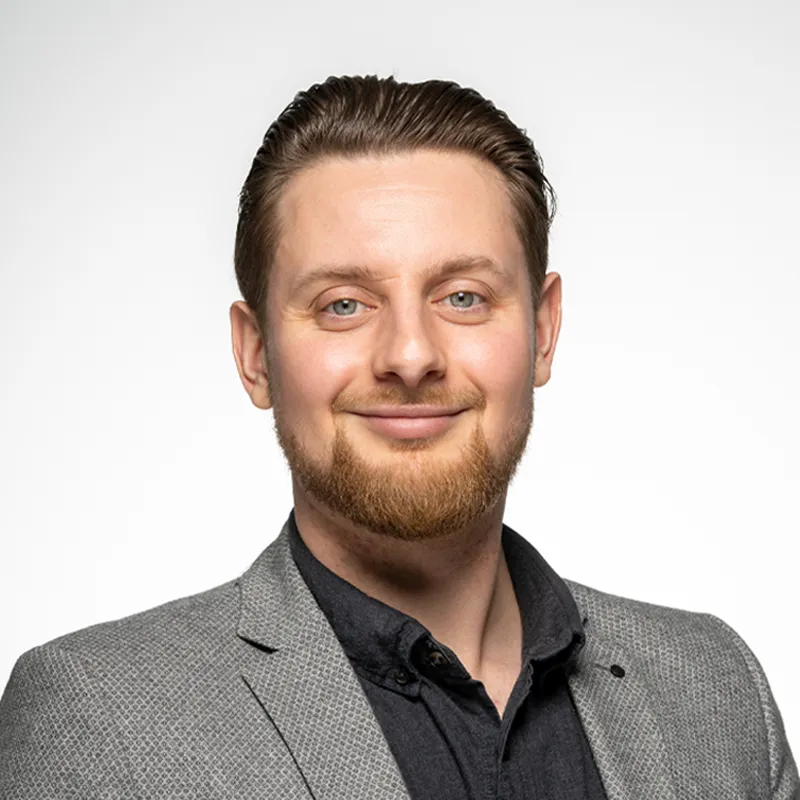
Kyle (Hogir) van de Langemheen joined the SDSC in September 2025 as a Machine Learning Engineer in the Innovation team, based in Lausanne.
Kyle holds an MSc in Artificial Intelligence from the University of Groningen. He brings several years of experience applying AI across research and industry.
Outside of his professional interests, Kyle enjoys hiking, reading, cooking, and coffee.
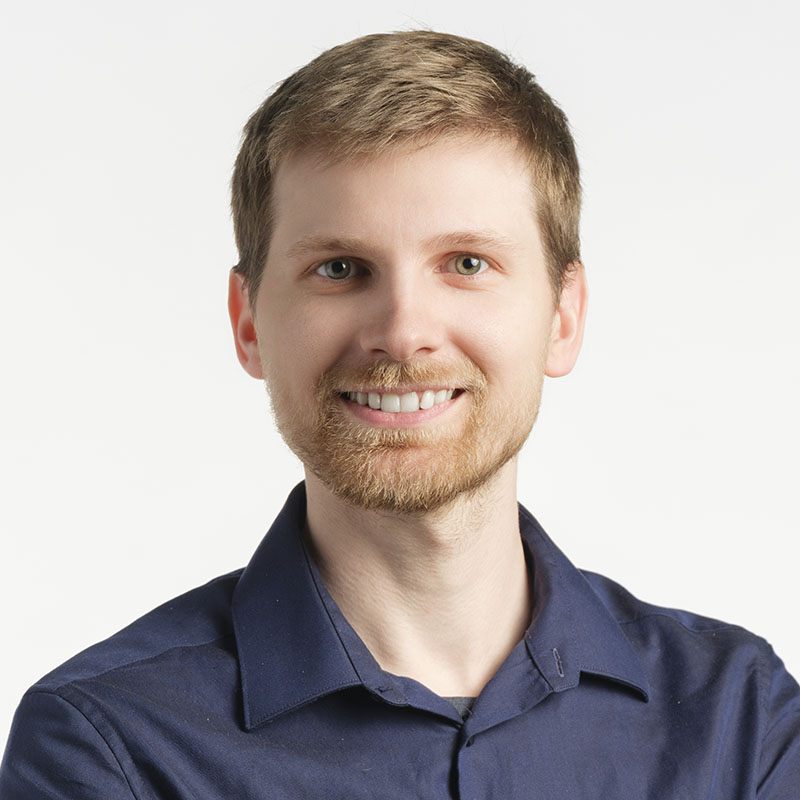
Thibaut holds a B.Sc in Computer Science from HEIG-VD. Before joining the SDSC, he worked in startups where he developped a diverse skill set combining cloud infrastructure, database and application development. Thibaut is very enthusiatic about new technologies and best coding practices and he is looking forward to supporting the team and its projects.

Ivan-Daniel joined the SDSC Innovation team in September 2022, where he works as a Data Scientist. He obtained an MSc in Robotics (2022) from EPFL and holds a BSc in Microengineering (2019), also from EPFL. His main fields of interest are Machine Learning, Computer Vision, and animal locomotion modeling.

Presentation
Building machine learning models is only a fraction of the effort required to deliver value in production. Critical failures occur at the interface between data science and engineering: brittle pipelines, lack of reproducibility, poor monitoring, and unclear ownership. This 1-day workshop introduces the principles and practices of MLOps, focusing on how to operationalize ML systems reliably and efficiently. It covers classical DevOps methodologies and their adaptation to the ML lifecycle, including versioning, testing, deployment, and monitoring. The course emphasizes practical design choices and trade-offs required to move from notebooks to production-grade systems.
Main objectives:
- Understand the core principles of DevOps and their extension to MLOps
- Structure ML projects for reproducibility, versioning, and collaboration
- Design and implement CI/CD pipelines adapted to ML workflows
- Manage the full ML lifecycle, including experiments, models, and deployments
- Monitor production systems, detect model or data drift, and trigger retraining workflows
Topics covered:
DevOps principles and culture – continuous integration, continuous delivery, automation, and infrastructure as code / Version control, testing strategies, and deployment pipelines / From DevOps to MLOps – adapting engineering practices to the ML lifecycle, experiment tracking, model versioning, and governance / Production ML systems – model deployment strategies, monitoring, drift detection, and continuous retraining workflows.
Details
Prerequisites
To make the most of this course, participants should have:
• Intermediate programming skills in Python
• Basic understanding of ML fundamentals and LLM applications
Participants are required to bring their own laptop for hands-on exercises.
Course fee*
1,000.- Swiss Francs
* 10% special discount for contributing members of EPFL Alumni and EPFL VPI partners, SDSC partners, EPFL AI Center and SNAI partners.
Registration deadline
September 24, 2026
Number of participants is limited
Programme
Other events
AMLD Workshop Generative AI for Forward and Inverse Design in Architecture and Engineering
AMLD 2024 | Clinical AI: from Research and Development to the Bed Side
SDSC-Connect | AI for Precision Medicine
Synthetic Data for Biomedical Applications

Before joining SDSC, Arshjot Khehra received his MSc in Artificial Intelligence from USI Lugano, where he completed his thesis on hierarchical graph reinforcement learning. Previously, he worked for 4+ years across India and Singapore gaining data science experience in insurance, logistics, and manufacturing sectors. He also holds a BSc in Industrial Engineering from PEC Chandigarh. Over the course of his career, Arshjot worked on a wide array of projects, such as, handwritten text recognition and generation, voice matching across phone call recordings, policy lapse rate prediction for customer retention, and automated insurance claim processing.

Matthias Galipaud obtained his PhD in evolutionary biology in 2012 from the University of Burgundy in Dijon (France), and held postdoctoral positions as a mathematical biologist at the university of Bielefeld (Germany) and the university of Zurich, where he researched the evolutionary theories of aging and mate choice. In 2020, he became a data scientist, developing machine learning solutions for startups in Switzerland and Australia before joining the SDSC Innovation Team in November 2022.

Valerio started his career working for 7 years as a particle-physics researcher at CERN. In 2016, he moved to consulting, applying data science in several industries. First, he joined the Quant team of Ernst & Young in Geneva. Later, he created his own company, SamurAI sàrl, providing consulting services for his clients. He also has a passion for teaching very complex subjects in simple terms. That is why he particularly enjoys offering training programs to private companies and universities. Valerio joined the SDSC in May 2022 as a Principal Data Scientist with the mission of accompanying industrial partners and other institutions through their data science journey.
Data Science for the Sciences
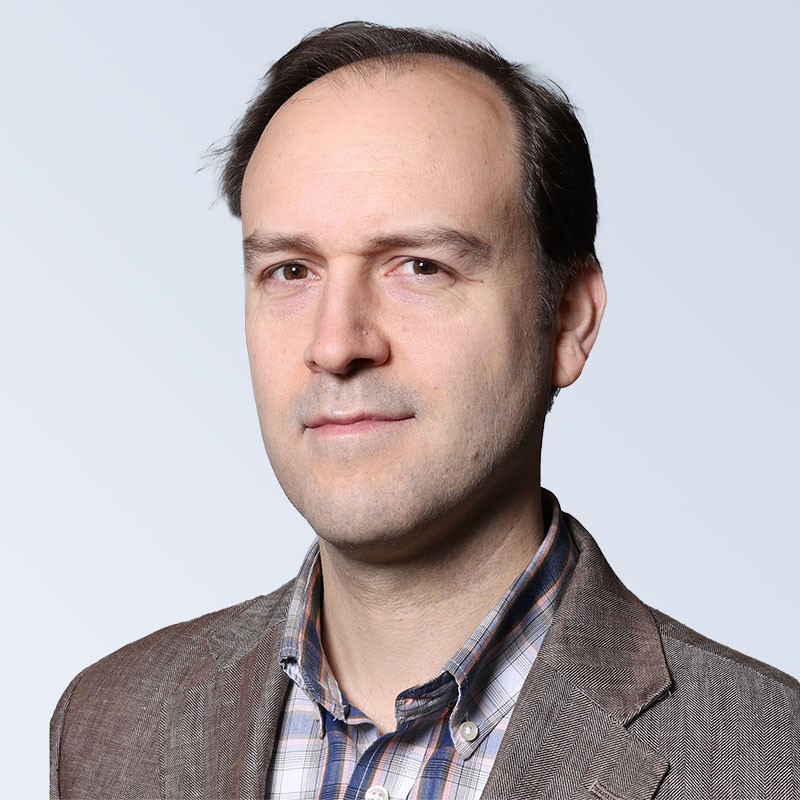
Guillaume Obozinski graduated with a PhD in Statistics from UC Berkeley in 2009. He did his postdoc and held until 2012 a researcher position in the Willow and Sierra teams at INRIA and Ecole Normale Supérieure in Paris. He was then Research Faculty at Ecole des Ponts ParisTech until 2018. Guillaume has broad interests in statistics and machine learning and worked over time on sparse modeling, optimization for large scale learning, graphical models, relational learning and semantic embeddings, with applications in various domains from computational biology to computer vision.
ENID | Enabling Innovation with Data Science at UNIL-EPFL

Prof. Olivier Verscheure is the director and founder of the Swiss Data Science Center (SDSC). Olivier also co-leads a joint training program between EPFL and HEC Lausanne, specifically designed for senior executives. Since 2018, Olivier has been a member of the Board of Directors of Lonza, a global leader in the life sciences sector. This company provides products and services to the pharmaceutical, biotechnology, and specialized healthcare industries.Olivier began his career at IBM Research after earning his Ph.D. in computer science from EPFL. He held several research and leadership positions at the IBM T. J. Watson Research Center in New York and co-created and co-directed the IBM Research center in Dublin, Ireland, before joining the EPFL in 2016.
Matthias Galipaud obtained his PhD in evolutionary biology in 2012 from the University of Burgundy in Dijon (France), and held postdoctoral positions as a mathematical biologist at the university of Bielefeld (Germany) and the university of Zurich, where he researched the evolutionary theories of aging and mate choice. In 2020, he became a data scientist, developing machine learning solutions for startups in Switzerland and Australia before joining the SDSC Innovation Team in November 2022.

Olivier joined the SDSC as a data scientist focused on industry collaborations in February 2023. He obtained a MSc in Physics (2017) from EPFL with a minor in Mathematics, and a PhD in Astrophysics (2021) from Aix-Marseille University. Before joining the SDSC, he worked in a small start-up, as a data scientist, on a variety of topics, including data wrangling, natural language processing and time series forecasting.
Clément Lefeebvre joined the SDSC in January 2019 as a Data Scientist with an emphasis on industry-oriented projects in the Innovation team, based in Lausanne.
He holds a Bachelor of Science degree in Physics, acquired in 2016 from the École Polytechnique Fédérale de Lausanne (EPFL) in Switzerland. Following this, he earned a Master of Science in Computational Science and Engineering in 2018, also from EPFL. Throughout his academic journey, Clément concentrated on leveraging Data Science and Machine Learning techniques to enhance efficiency in industrial processes. Subsequently, he developed a specialized interest in Generative AI, with a particular focus on Natural Language Processing (NLP), especially in the application of Large Language Models for innovation.
Thibaut holds a B.Sc in Computer Science from HEIG-VD. Before joining the SDSC, he worked in startups where he developped a diverse skill set combining cloud infrastructure, database and application development. Thibaut is very enthusiatic about new technologies and best coding practices and he is looking forward to supporting the team and its projects.
Contact us
Would you like to explore how we can work together?
Our team of data scientists and professionals looks forward to engaging in impactful, results-driven collaborations with you.