

Pilot project ENERBAT
Data-Driven Pathways to Net Zero for the Canton of Vaud’s Building Portfolio
Abstract
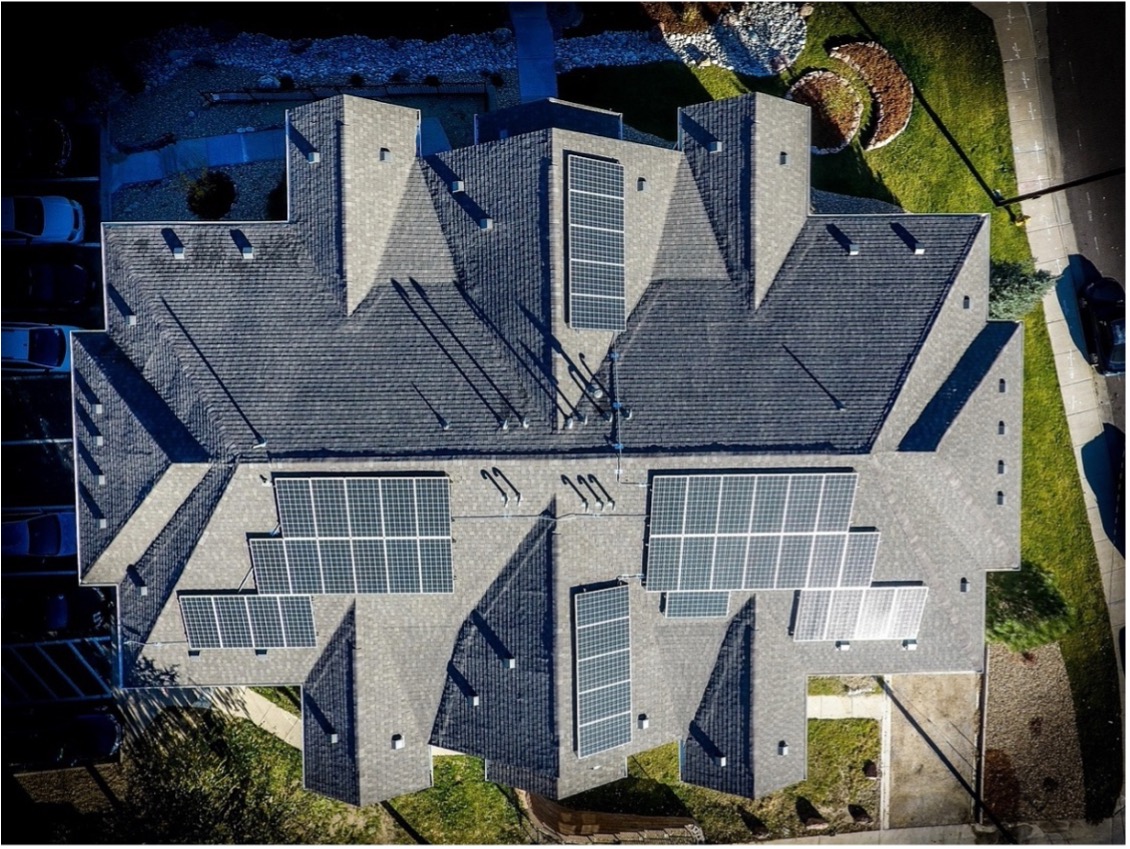
The ENERBAT project is a collaboration between the Swiss Data Science Center (SDSC) and the Canton of Vaud. Its goal is to demonstrate how data can support informed decision-making inline with the cantonal energy strategy. Buildings account for 45% ofSwitzerland’s total energy consumption and 33% of its CO₂ emissions. Under itsReal Estate Strategy, the Canton of Vaud aims to achieve carbon neutrality across all over 500 state-owned buildings by 2040. This requires reducing CO₂ emissions by 50-60% by 2030 and optimizing energy performance throughout the entire building lifecycle.
People
Collaborators

Roberto holds an M.Sc. and a Ph.D. in Particle Physics from the University of Torino, Italy. He has worked for several years in fundamental research as a senior fellow and data scientist at the CERN Experimental Physics division and on a research project supported by the Belgian National Fund for Scientific Research (FNRS). In 2018 he moved to EPFL to work on data mining and Machine Learning techniques for the built environment and renewable energies. He has started and led multiple collaborations with academic and industry partners in the energy domain. Roberto joined the SDSC in September 2021 as a Principal Data Scientist with the mission of accompanying industries, NGOs and international organizations through their data science journey.



After earning a MSc in Theoretical Physics at University of Padua, Giulio graduated in Quantitative Finance from Bocconi University. Before joining the SDSC industry cell in June 2021, he spent a few years working in the financial sector, where he mainly dealt with the application of machine learning to financial risk management. When not coding, Giulio spends his free time playing bass guitar, hiking and cooking.
PI | Partners:
HEIG-VD
WSP
description
Objective
The SDSC’s primary objective was to develop a data-driven renovation strategy based on building characteristics. By combining publicly available data – such as architectural and structural features, location, and past renovation history – the machine learning model generates tailored, energy-efficient renovation strategies. The aim is to shift from one-off, expert-based assessments to scalable, personalized guidance that enables the canton to prioritize renovations across its extensive real estate portfolio.
Approach/Solution
Achieving carbon neutrality across all government-owned buildings requires a clear understanding of how different renovation measures reduce emissions. Quantifying the real impact of available strategies is essential for informed decision-making and effective project prioritization. Using its expertise in data science and ML, the SDSC recommended and developed a data-driven model to identify the most effective emission-reduction measures for each building – such as renovations, heat pump installations, or photovoltaic (PV) systems.
The project was conducted in several stages and can be broadly divided into two main phases:
• Estimating the heating, domestic hot water, and electricity needs for each building in the canton of Vaud;
• Defining a tailored renovation strategy for each DGIP building to enable the entire real estate portfolio to achieve net-zero emissions.1
In the first phase, the energy demand of each building was estimated using the methodology defined in the SIA 380/1(2009) standard, widely recognized among building engineers and architects. This standard provides formulas to calculate a building's energy requirements based on a range of variables. Accordingly, this phase focused on collecting and aggregating all required input data for each building. Where variables were missing from public datasets, their values were estimated using statistical models.
In the second phase, cost-optimal renovation strategies for canton-owned buildings were defined in line with the SIA 390/1 (2025) criteria. The objective was to reduce greenhouse gas emissions across the portfolio to below the net-zero threshold of 3.5 kgCO2-eq/m².
Complementing the SDSC core competencies in data science, the building simulation and strategic energy governance capabilities of industry partner WSP, as well as the academic expertise of the HEIG-VD in energy and building physics, were instrumental in ensuring a rigorous analysis and robust validation of the results.
Further details of the methodology and results can be found in the associated publication: A data-driven multivariate estimation of building heat demand: The case of the Canton of Vaud
Impact
The ENERBAT tool, by combining consumption estimation with the duration of the work and an estimate of the costs, makes it possible to establish a strategy for prioritizing buildings and the work to be carried out in the state's real estate portfolio in order to move towards carbon neutrality by 2040.
The tool is designed to be generalizable and could be adapted and scaled to other cantons – or even nationwide – while accounting for regional climatic and architectural differences.
This project demonstrates how advanced data science, combined with strong collaboration between industry, academia, and the public sector, can deliver practical solutions to support at more sustainable Swiss energy system in line with national energy strategy goals.

Footnotes:
1 DGIP: Direction Générale des immeubles et du Patrimoine.
Presentation
Gallery
Annexe
Additional resources
Bibliography
Publications
Related Pages
More projects
LUCID National Data Stream

Syngenta: Steam consumption optimization

EKZ: Synthetic Load Profile Generation

OneDoc: Ask Doki
News
Latest news
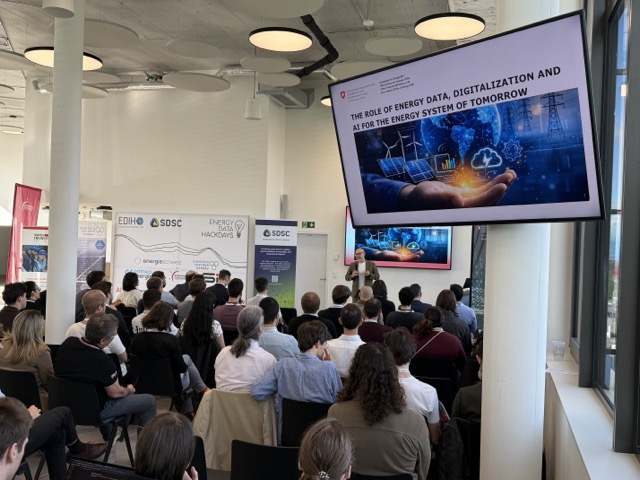
Coding the Future: Energy Data Hackdays Expand to French-speaking Switzerland
Coding the Future: Energy Data Hackdays Expand to French-speaking Switzerland

Science des données : le SDSC et le Canton de Vaud soutiennent quatre projets appliqués
Science des données : le SDSC et le Canton de Vaud soutiennent quatre projets appliqués
Le Swiss Data Science Center inaugure son siège au Biopôle de Lausanne
Le Swiss Data Science Center inaugure son siège au Biopôle de Lausanne
Contact us
Let’s talk Data Science
Do you need our services or expertise?
Contact us for your next Data Science project!