
TGSF-DA
Data Analysis of the Turbulence and Gravity roles in Stellar Formation

Abstract
Where do stars begin to form inside vast clouds of gas, and why do stars within the same cluster often share similar chemical compositions? Answering these questions requires understanding how gravity and turbulence, dynamics that are difficult to observe directly, interact.
Project TGSF-DA applies data science and machine learning to extreme-scale simulations generated with the SPH-EXA supercomputing framework. These methods will identify and track dense gas regions that may develop into stars, measure how turbulence transports and mixes chemical elements, and quantify chaotic gas motions. The project will also develop visualization methods and analyze computational performance to make future simulations easier to explore and more efficient.
Expected outcomes include new insights into star formation and turbulence, reusable open-source analysis tools, and more energy-efficient supercomputing.
People
Collaborators

Georgios Kissas joined the SDSC Research team as a Senior Data Scientist in November 2025.
Georgios earned his PhD in Mechanical Engineering from the University of Pennsylvania , where his dissertation established hybrid deep learning and computational fluid dynamics approaches for cardiovascular digital twins. He also holds a Master’s degree in Computational Mechanics from the National Technical University of Athens. Before joining SDSC, he was a Post Doctoral Fellow at the ETH AI Center and Lecturer at ETH Zurich. His research focuses on deep learning algorithms for predicting the behavior of complex physical systems (neural operators, transformers, generative AI) and discovering physics relations using formal languages (differential equations, constitutive models), with applications spanning between structural engineering, weather, material modeling, and cardiovascular biomechanics.


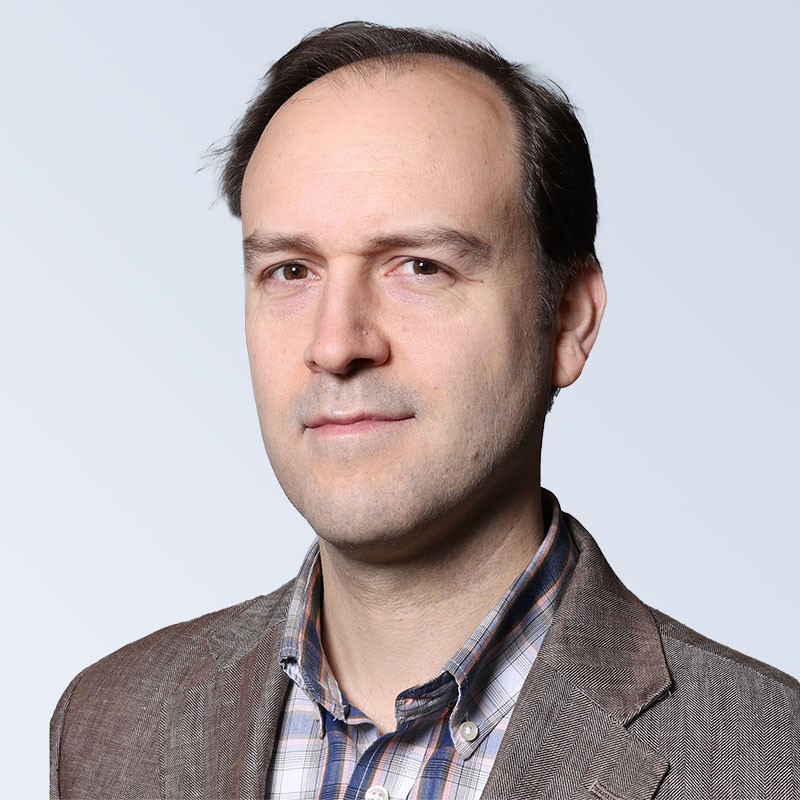
Guillaume Obozinski graduated with a PhD in Statistics from UC Berkeley in 2009. He did his postdoc and held until 2012 a researcher position in the Willow and Sierra teams at INRIA and Ecole Normale Supérieure in Paris. He was then Research Faculty at Ecole des Ponts ParisTech until 2018. Guillaume has broad interests in statistics and machine learning and worked over time on sparse modeling, optimization for large scale learning, graphical models, relational learning and semantic embeddings, with applications in various domains from computational biology to computer vision.
PI | Partners:
University of Basel, Center for Scientific Computing
- Dr. Rubén Cabezon
- Prof. Dr. Florina Ciorba
- Dr. Osman Seckin Simsek
University of Zurich, Department of Astrophysics
- Prof. Dr. Lucio Mayer
Swiss National Supercomputer Center
- Dr. Sebastian Keller
- Dr. Jean Favre
Heidelberg University, Institute for Theoretical Astrophysics, Center for Astronomy
- Prof. Dr. Ralf Klessen
- Oliver Avril
description
Motivation
Interstellar turbulence, coupled with self-gravity, governs how dense pre-stellar cores emerge within molecular clouds - but understanding this process remains one of the most challenging problems in astrophysics. The difficulty arises from the enormous range of scales and the complex interplay of forces involved, making accurate simulation and analysis technically demanding. Traditional Smoothed Particle Hydrodynamics (SPH) methods struggle in this domain: they introduce excessive dissipation, fail to resolve subtle turbulent structures, and do not correctly capture energy cascades in subsonic regimes. Although recent methodological and computational advances in SPH-EXA have enabled the largest and most physically accurate simulations to date, they now produce an unprecedented volume of data. Without dedicated tools for data extraction, performance analysis, and scientific interpretation, much of the potential insight remains inaccessible. The TGSF-DA project is motivated by the need to bridge this gap - turning cutting-edge simulation outputs into a deeper physical understanding of star formation and turbulence.
Proposed Approach / Solution
TGSF-DA builds on the extreme-scale simulations produced within the SPH-EXA ecosystem, which model interstellar turbulence and self-gravity with unmatched resolution. This project focuses on transforming that raw data into actionable scientific knowledge through advanced and scalable data-analysis workflows. Key objectives include: (1) characterizing how pre-stellar cores form and determining their initial mass function in relation to local and global turbulence properties; (2) investigating turbulent mixing to clarify the origin of chemical homogeneity observed in stellar clusters; (3) advancing the broader theory of turbulence by computing Lagrangian Lyapunov exponents using the intrinsic advantages of SPH; (4) analyzing performance traces from high-end computing runs to identify causes of load imbalance, inefficient resource use, and energy waste; and (5) enabling efficient visualization and in-situ analysis on modern heterogeneous architectures. Through these steps, the project tightly integrates astrophysics, turbulence theory, data science, and high-performance computing.
Impact
The TGSF-DA project will generate unique scientific outcomes because no other effort has simulated turbulent, self-gravitating environments at comparable scale, nor collected such extensive performance and energy-consumption data. The resulting discoveries will reshape our understanding of how stars form, how turbulence behaves in extreme astrophysical conditions, and how large-scale HPC simulations can be optimized for sustainability. These insights will benefit diverse fields including cosmology, computational fluid dynamics, and exascale computing. Reducing computational overhead directly translates into lower carbon emissions from future simulation campaigns.
Presentation
Gallery
Annexe
Additional resources
Bibliography
- Klessen RS, Lin DN. Diffusion in supersonic turbulent compressible flows. Physical Review E. 2003 Apr;67:046311. arXiv:astro-ph/0302527.
- Agertz O, Moore B, Stadel J, Pottschmidt K, et al. Fundamental differences between SPH and grid methods. Monthly Notices of the Royal Astronomical Society. 2007 Sep;380:963–978. arXiv:astro-ph/0610051.
- Cabezón RM, García-Senz D, Figueira J. SPHYNX: an accurate density-based SPH method for astrophysical applications. Astronomy & Astrophysics. 2017;606:A78. arXiv:1607.01698.
Publications
Related Pages
More projects

MOBIKO
SCOPE

I-DEEP-TRUST

ECOCLIM
More projects
News
Latest news
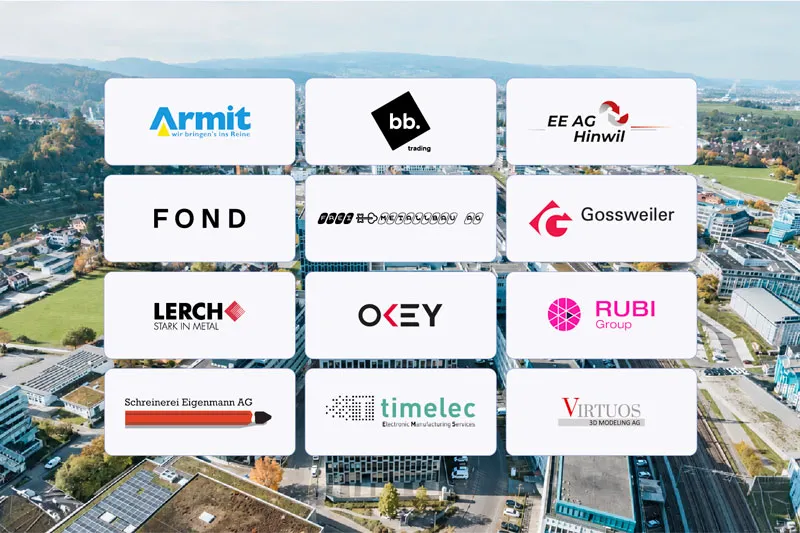
12 Zurich SMEs join next AI Innovation Program
12 Zurich SMEs join next AI Innovation Program
La science des données au service de la neutralité carbone du canton : ENERBAT ouvre la voie
La science des données au service de la neutralité carbone du canton : ENERBAT ouvre la voie

The SDSC to support 31 projects through its second National Calls
The SDSC to support 31 projects through its second National Calls
Contact us
Would you like to explore how we can work together?
Our team of data scientists and professionals looks forward to engaging in impactful, results-driven collaborations with you.